


Finding A Foundling: Textiles of Identity #68
Jo Andrews
In a small corner of London lies one of the most evocative collection of textiles anywhere in the world. The fabrics – which are quite ordinary – are in the so-called billet books which recorded the identity and clothing of every baby accepted at the Foundling Hospital from the mid 1700s onwards.
What makes these books so moving is that often the birth mother left a scrap of cloth or ribbon when she gave up her baby. She held onto the other half so that if her circumstances changed, she could return to the Foundling Hospital, match the two pieces of cloth and reclaim her child. The result, two hundred and fifty years later, is one of the best collections of textiles samples worn by ordinary people in Europe in the seventeen hundreds.
The Glorious Quilts of Gees Bend #67
Jo Andrews
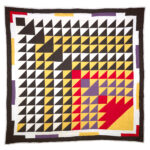
An extraordinary new exhibition has just opened in the small Alabama township of Gees Bend, and it gives us some clues as to why this community of world-famous quilters became home to one of America’s greatest creative legacies. The quilts of Gees Bend were first exhibited at the Museum of Fine Arts in Houston, nearly 25 years ago and today their work hangs in many global art galleries. The critics have repeatedly asked how an isolated community of Black American women could have anticipated many of the traditions of modern art without access to any art schools or training.
Althea McNish – Queen of Colour #66
Jo Andrews
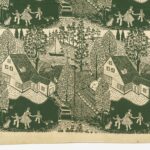
It’s over five years since the Anglo Trinidadian textile designer, Althea McNish, died in near obscurity in London. In that time her reputation and her standing has grown dramatically and she is now recognized around the world as the one of the first Black designers of international standing. There has been a retrospective exhibition of her work, the Victoria & Albert Museum highlights her work, and there is a biography of this remarkable woman in progress.


Images from Haptic and Hue’s eighth season of podcasts