

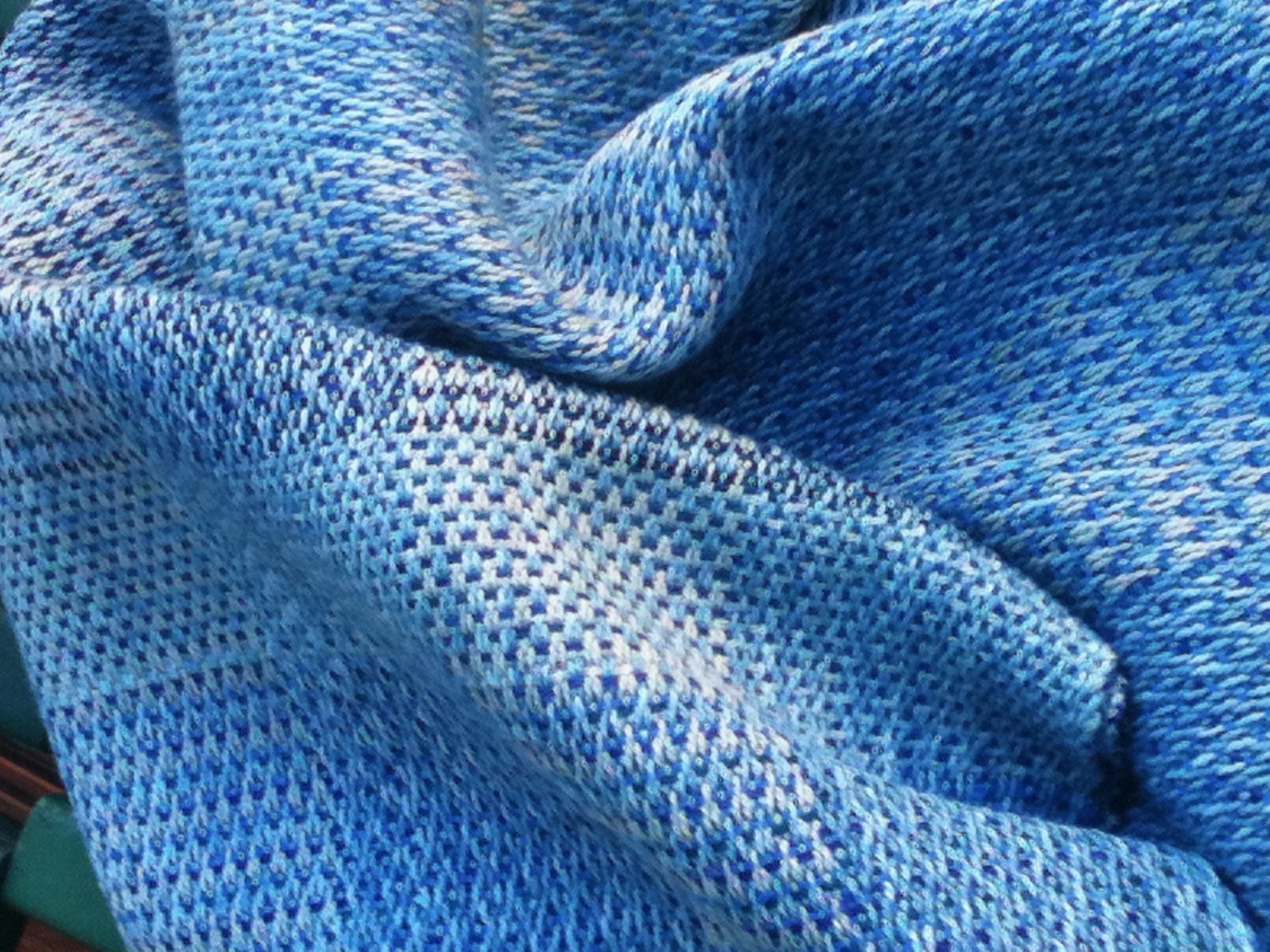
Episode #67
Jo Andrews
The quilts of Gees Bend were born of need, but when they were first exhibited, in the early 2000s, they were recognised as fresh, and utterly original. Since then not only has their legacy and reputation grown, but other African American quilters have also come to the fore. These include communities in Mississippi, as well as those who carried their southern quilt making traditions to California during World War Two.
Now the new exhibition in Gees Bend tells the story of the first named quilter in the township – a woman who almost certainly arrived in America from West Africa, as a child, on the last known slave ship to enter US waters in 1860, over 50 years after the trade in human beings had allegedly been outlawed.
Notes
The exhibition called Between History and Memory: Dinah Miller’s Legacy in Gees Bend is on at the River Gallery in Gees Bend, Alabama and it is curated by Loretta Pettway Bennett: https://www.geesbend.org/river-gallery
You can find the Souls Grown Deep Foundation at https://www.soulsgrowndeep.org/ and also on Instagram @soulsgrowndeepfoundation.
You can find out more about the Clothilda and its arrival in America at
If you are in the UK, or visiting this spring and early summer, the American Museum in Bath has an exhibition called: Kith and Kin: The Quilts of Gees Bend which opens in February. https://www.americanmuseum.org/whats-on/kith-and-kin-the-quilts-of-gees-bend-exhibition
The podcast was first uploaded as Episode #9 A Feeling of Comfort in 2021. It has been updated for this episode with new information.
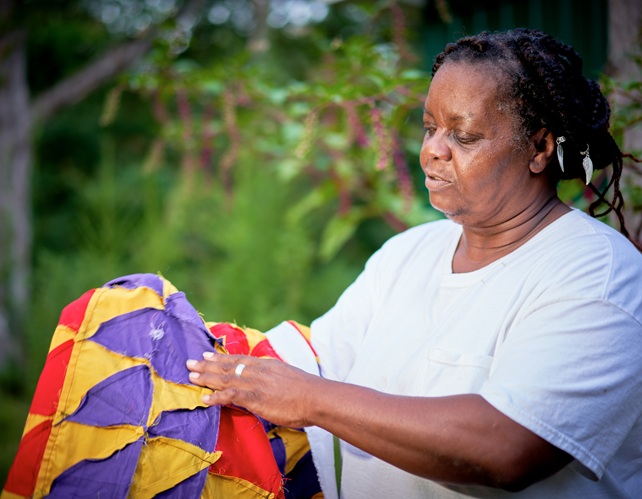
Mary Margaret Pettway. Photo Credit Stephen Pitkin
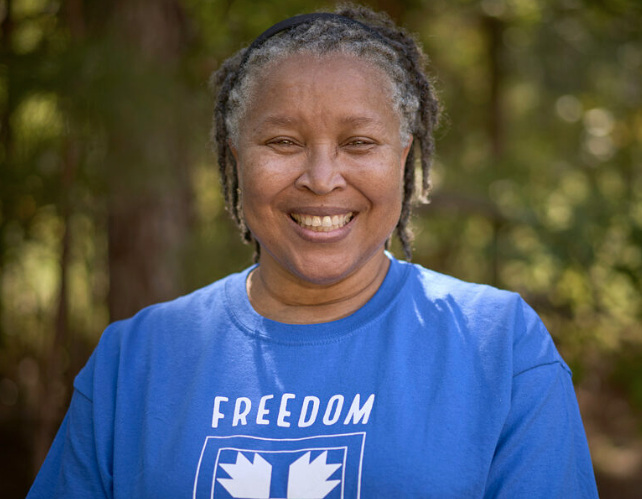
Loretta Pettway Bennett. Photo by Stephen Pitkin
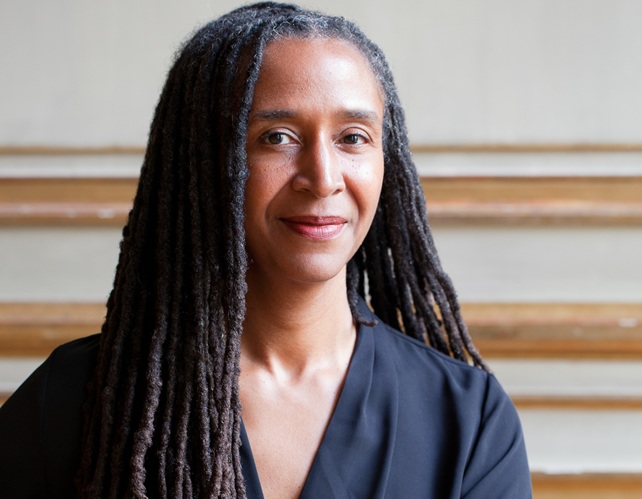
Raina Lampkins Fielder, Curator of the Souls Grown Deep Foundation. Photo by Ana Bloom
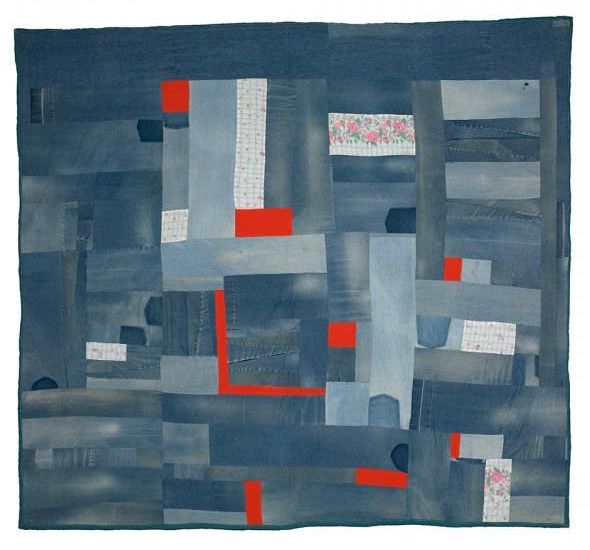
Work-clothes quilt by Loretta Pettway Bennett
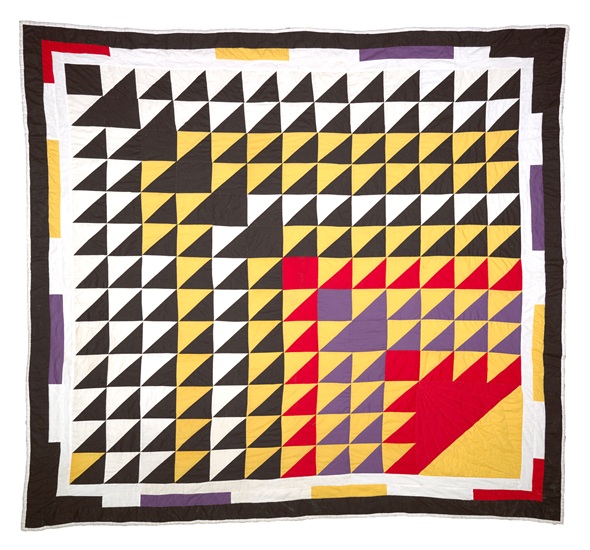
Mary Margaret Pettway: Birds in the Air. Photo Credit: Stephen Pitkin
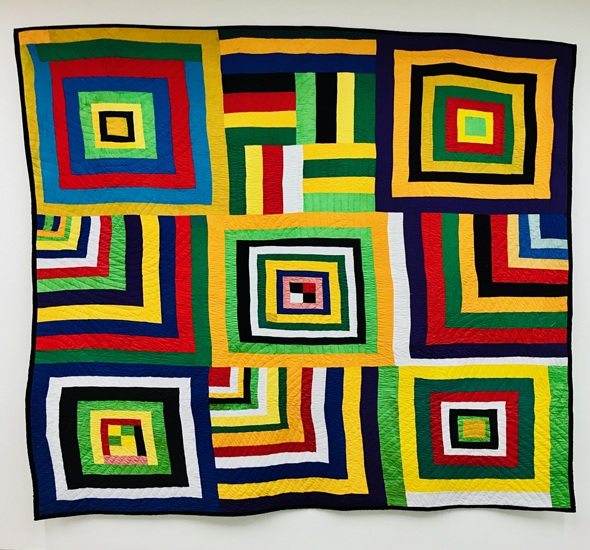
Pig in the Pen: Rita Mae Pettway 2019. Souls Grown Deep Foundation. Photo by Stephen Pitkin
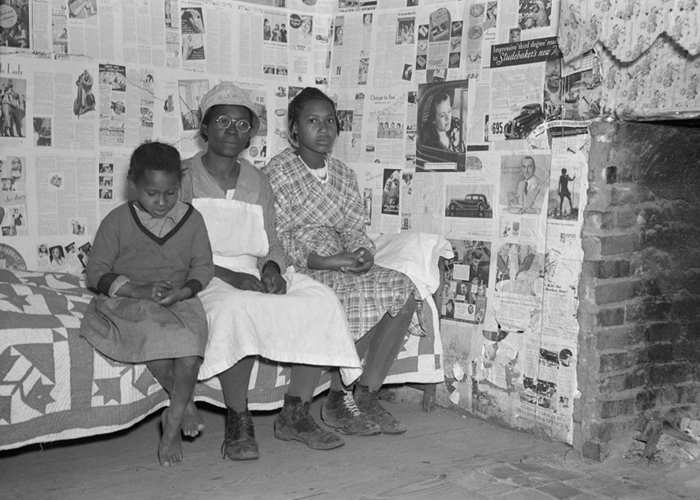
Gees Bend Home, 1937. Photo by Arthur Rothstein
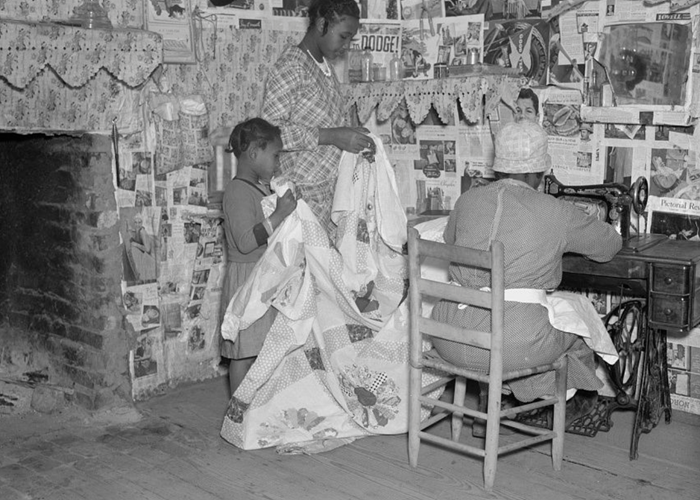
Quilt-making at Gees Bend, 1937. Photo by Arthur Rothstein
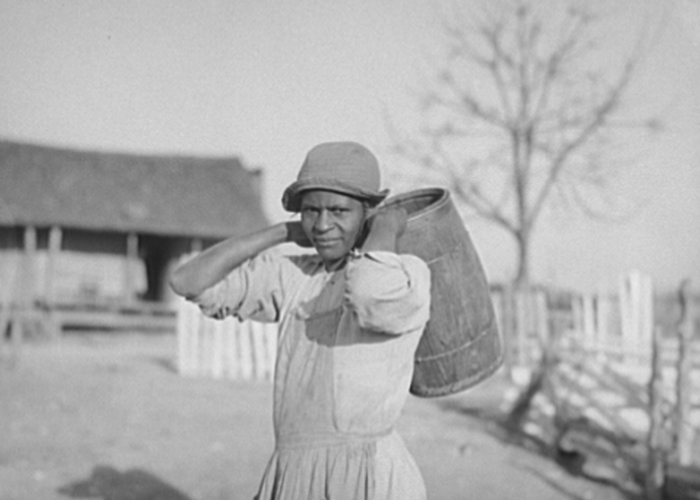
Annie Bendolph, Quiltmaker, Gees Bend. Photo by Arthur Rothstein, 1937
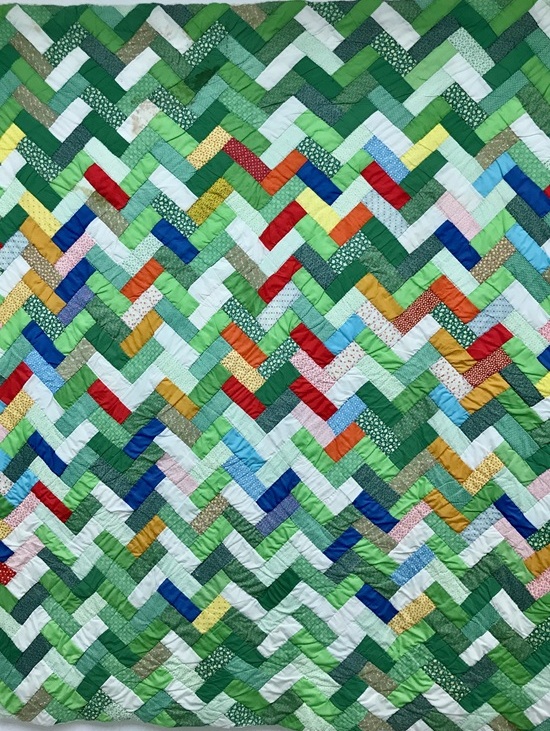
Coat of Many Colors, Candis Mosely Pettway, 1970. Souls Grown Deep Foundation. Photo by Stephen Pitkin
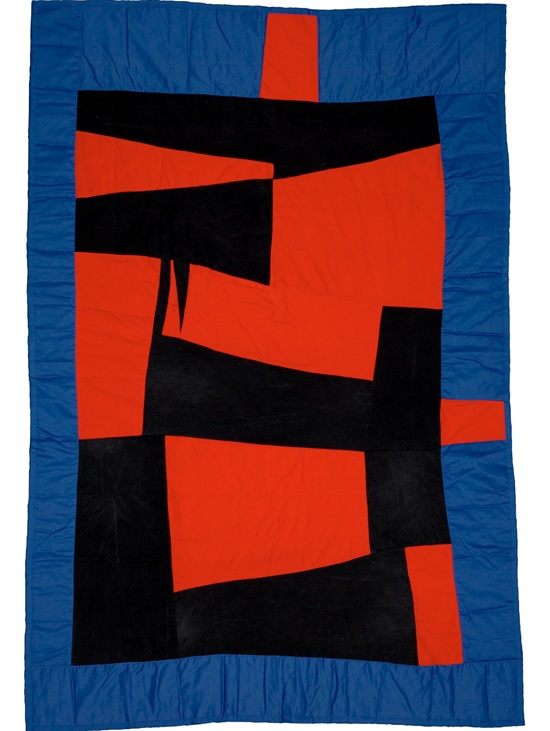
Loretta Pettway Bennett, Medallion, 2005. Collection of the Souls Grown Deep Foundation. Photo: Stephen Pitkin
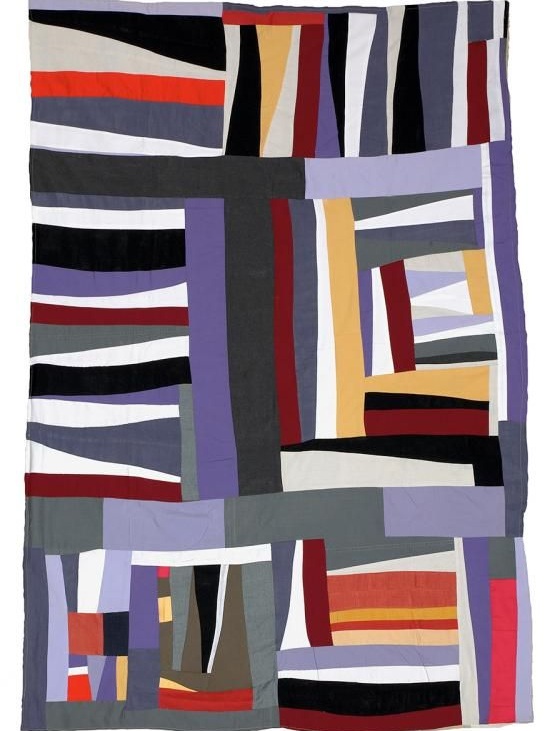
Strips and Strings by Mary Lee Bendolph, 2003, Fine Arts Museum, San Francisco
Script
The Glorious Quilts of Gees Bend
JA: For over 150 years a small isolated township on a deep curve of the Alabama River in the American south has acted as an extraordinary incubator of the artistry and skills of a community of women working with textiles. The Gees Bend quilters have redefined American art, their quilts are colourful, fresh and utterly original. Each one tells its own story, as well as being embedded in the community from which they come.
When he first saw them at the Museum of Fine Art in Houston in 2002, Michael Kimmelman, of the New York Times said the quilts were: “some of the most miraculous works of modern art America has produced.” adding, “Imagine Matisse and Klee (if you think I’m wildly exaggerating, see the show) arising not from rarefied Europe, but from the caramel soil of the rural South in the form of women, descendants of slaves when Gee’s Bend was a plantation.” Many of the quilts now live in the world’s top art galleries.
It puzzled the art establishment that the work of this hard scrabble community had prefigured the lines and concepts of much of modern art. But now a new exhibition in Gees Bend itself offers us some clues. It tells the story of Dinah Miller – one of the earliest named quiltmakers in Gees Bend and the founder of a dynasty of fine quilters – five generations so far and counting.
According to the story passed down from daughter to granddaughter. Dinah arrived in America as a thirteen-year-old in July 1860 aboard the last known slave ship ever to dock in US waters. The Clotilda smuggled 110 kidnapped West Africans illegally into the Mobile River, a full 52 years after the trade in human beings had been outlawed in America.
As one curator says – these people who endured the Middle Passage may have come with empty hands but they did not come with empty heads. Amongst the gifts they brought were the strong artistic traditions, the sense of colour and line that comes from West Africa’s rich material culture. Interestingly it is exactly the same tradition that influenced many of the modernist artist like Picasso, Matisse, Klee, Braque and Modigliani. So, in some sense the art critics have their question the wrong way around: the culture and artistic sensibilities that the Gees Bend quiltmakers are drawing on belong to directly to them and their West African ancestors, and it is the European artists who ‘borrowed’ from that tradition: not the other way around.
Welcome to Haptic & Hue’s Tales of Textiles. I’m Jo Andrews, a handweaver interested what textiles tell us about ourselves and our communities: stories that go far beyond the written word. This episode is about the quilters of Gees Bend and how they see their lives and their quilting. In it, listen to Loretta Pettway Bennett who is a direct descendant of Dinah Miller, being her great great granddaughter. We also hear from Loretta’s cousin, Mary Margaret Pettway.
Mary Margaret: Well, it was cold down here. We didn’t have a whole lot. I mean, you know, in the way of keeping your children are warm and stuff like that, we didn’t have a whole lot. So we, we took what we had and we made what we needed. If you needed a quilt on the bed, that’s what you made. If you needed a quilt to hang to the windows. Cause those old houses, those were really raggedy. Some of them, right? No insulations in the walls. And some of them were in such bad shape, you can actually look through the floor onto the ground. You don’t want your children to be cold, you know? So, you made enough for, to hang on the wall, to spread on the floor, to spread it on the wall, to hang over one, plus the bed.
JA: That’s Mary Margaret Pettway, and when she says we didn’t have a whole lot, she means that in a way in which would be hard for many of us to grasp. There are some good photographs of Gees Bend taken in the 1930s, some of which I’ve posted in the show notes for this episode. At that time people were living without running water or electricity in incredibly ramshackle log cabins. They used newsprint to line the walls. Things did change somewhat, but it has never been easy:
Mary Margaret: I mean, it’s what we’re used to, we grew up poor. Okay. Lot of people had gardens. Lot of people had hogs. A lot of people had cows. And if you had all three you’re had enough, you were rich. Okay. So, it used to be, if somebody killed a hog or a cow, everybody around the community would get some meat, you know, a little, a little thing of grease to cook with. You know, if somebody had a garden and you didn’t have one or something was growing in their garden, that you didn’t have, you can go to their garden or go to them, ask them for it. And they would give it to you.
JA: The families of Gees Bend were subsistence farmers with their own animals, and gardens, some pay from picking cotton, something that the whole community was involved in from early childhood. Here’s Loretta Bennett who is Mary Margaret’s cousin.
Loretta: And, you know, you had to be in the field, to pick the cotton and that going to be like from sun up to you know, almost sun down time to get it all out of the field before the raining season come. Actually, even five years old and six years old, they didn’t necessarily pick the cotton, but they may have to bring water to the ones that was out in the field doing the picking. And so, they would have to carry the water out and give you a drink of water. So kind, of everyone got a kind of had a share in it, even babies, moms had to bring their babies., the babies may get pulled on the sack of, you know, where you put the cotton inside as they was picking it.
JA: And if you wanted curtains, for your home, covers for your bed and insulation on the walls you had to make quilts. It is out of this necessity that the artistry and skill of the women of Gees Bend originates. Mary Margaret says they used anything and everything for quilts:
Mary Margaret: They would use seed sacks and take time and rip them. And actually, if you rip it just right, you can save the thread so you can do what they call used to call hooping in a quilt with it. And they use feed sacks, old pieces of sheet, old pants, old dresses, old shirts, you know, just whatever they can get their hands on.
JA: And here’s one element in the originality of the Gees Bend Quilts, the ability to make use of anything that comes to hand. The Pop Art movement developed in the 1950s and 60s in the UK and the US with its rejection of ‘museum art’ and its embrace of the ordinary and the commercial. But the women of Gees Bend had got there long before that, because they had to. Both Mary Margaret and Lorretta are accomplished artists. Their quilts hang on the walls of museums and galleries around the world. They have no formal art education but Gees Bend was in its own way a tough school: Here’s Mary Margaret:
Mary Margaret: In the sixties, we grew up under the quilt, which means if your mother had a quilt up, that’s where you were up under that quilt, so you can thread them needles and stick them back up through the quilt or hand them to them. But we took naps of under it too. We some of the old ones, they spread an old quilt after they have the quilt set up, they spread a really old raggedy, quilt up under there for the children to sit on and play with and practice their ABCs and stuff on. And yeah, so it literally means growing up, well, you didn’t grow up on it, but you know, being under the quilt when they were quilting it.
JA: And this was very much a family activity, women did not quilt alone – they learnt from each other and passed ideas amongst themselves, as Loretta explains:
Loretta: It’s what you call a quilting bee. You know, it might be like my mom, her mother, and some of my mom’s grandmother, auntie, something like that. And what they would do, they would go to different houses and quilt the quilts up, you know, it just was maybe about maybe four to five women’s in a group. And so, they would just take turns going to each other houses until they lifted the quilts up. Well, I can that I know of go back to my great, great, grandmother which her name was Dinah Miller. And so, we can go back to that, you know, distant.
JA: There’s a black and white picture taken about 1900 of a woman, who is undoubtedly related to Mary Margaret and Loretta, she’s tending some quilts that are airing over a fence. The quilts in front of her are startling in their originality. In Gees Bend these were almost impromptu exhibitions, everyone got a good look at your quilts as you aired them, and critically appraised them, gathering scraps of new ideas for themselves. This is one of the ways in which their artistry was valued and honed. And once girls emerged from the play den under the quilt, they too found themselves set to work
Loretta: I was about six years old, you know, just threading needles. And sometimes like in the summer months when my mom, my grandmother was piecing quilts they have some little pieces that they may not want to use and they, you know, they would let us practice on them. When I got about 12 or 13 years old, one summer, I decided I was gonna make this, this quilt. For some reason, I don’t know why, but my mom had a lot of octagon shape pieces already cut out. The quilt, it’s called a flower garden and I decided that I was gonna make this quilt and I made it it took me all long someone on it every day, just about all day, you know, except for when I had to go do some chores around the house. And it came out all crooked, but anyway, my mom kind of straightened it up and she, she you know, quilted it later. It made me feel really good. It was like I had something to do that summer.
JA: For Mary Margaret it was harder road:
Mary Margaret: Quilting was like a punishment for me, I think. And I say that because I was made to learn to quilt. You know, when you’re a child, you want to go out and play with everybody else. But my mother wasn’t having that. I don’t care who’s in the yard or came to play if she wanted you to do your quilting. That’s what you did.
JA: Both Mary Margaret and Loretta make original and lyrical work, but Loretta is clear that the traditions in which they quilt are drawn from their ancestors.
Loretta: Just looking at my mom’s quilts and the other ladies’ quilts and just looking at the way that they used what they had. And also looking at the clothing most of my quilts are repurposed clothing. And so, I like to use that. And as sometimes I just let it make themself and with a little music
JA: So, we have lots of elements that go to make up the skill and expertise shown in Gees Bend, but still there is an extra magic there. A flame of creativity, something special in their understanding of design and colour that has allowed generations of women to produce astonishing work. Mary Margaret and Loretta have slightly different explanations for this. Here’s Loretta:
Loretta: I think, cause we, maybe, because we was isolated in this little bend of the river, you know, one way in, one way out. So, we was not exposed to any type of like artwork or a lot of television or anything like that. We had television, but you only got so many channels. We wanted something, I guess you would say pretty and that we wanted to have on our beds or even hanging out on the wire to drive it just that it was our way of expressing our own individual creativity, I guess.
JA: For Mary Margaret its more of a puzzle:
Mary Margaret: You know, I wish I could answer that question. I don’t know. I mean, I look at some of the quilts and even some of the ones my mother did and answering truthfully, I wonder what was going on in her mind. But, I think they had an eye for what would be popular. A lot of quilts down here, they have that little piece of red in it or an odd coluor, you know, there’s not like the other ones, even with denim, you know, you got dark denim, you got light denim and denim shows the wear pattern in it, in the wash pattern in it. But you got that odd piece where it might be everything else might be old, old, really old washed and softened denim. And then you might have a new piece or something that looks like a new piece where they may have taken a pocket off. And that piece is beautiful up under there. It’s like new denim.
JA: Raina Lampkins Fielder is the curator of the Souls Grown Deep Foundation, it is dedicated to documenting, preserving and promoting the contributions of the African American Artists of the American South and the cultural traditions from which they grew. The words Souls Grown Deep come from a wonderful poem written by Langston Hughes. Raina believes that part of the explanation for the talent of Gees Bend comes right out of the hardship and experience of discrimination:
Raina: If you’re going to do something, you do it for yourself. And so that kind of spirit, and I think that’s just part of the African-American experience in general allowed for them allowed for the quilt makers of Gee’s Bend to really go their own way, as they say, to do ‘my way’ quilts where it’s like, okay, we might start on one on one route, but let’s see where it takes me. Let’s see what I can create within these borders that is transformative and, and bigger than the borders themselves. You didn’t have to play by a certain sort of rule because the rules were only there, the larger kind of societal rules to hold you back. So where can you find your own sort of freedom and articulation of yourself within something that is about muting what you have to say. And so, you know, if you’re a little bit more isolated, well, you can do what you want. And I think that is one of the things that kind of leads to that Gees Bend style that is so captivating to the rest of us, looking in on what is produced in that area, because it’s like almost this tug and pool between a restriction of the border, but then all of the majesty and improvisation and, and intention and story and, and biography and art that can occur within those, those borders. We see that there’s something there’s something different about it. We feel it, we sense it. That’s what, one of the things that’s so remarkable about these works.
JA: It took time for an understanding of what was happening in Gees Bend to seep into the outside world. Raina says it was a slow burn over many decades for the quilters to be appreciated:
Raina: Well, it’s interesting because I think that there have been many sort of sudden moments when people refocus their lens and maybe expand where they’re looking to see some of the amazing work that’s being made in the United States and in the South. I would say probably the time that is often noted as being that moment when people really saw what was going on in the community was in 1937, where a photographer Arthur Rothstein was basically taking survey photos of tenant farmers in Boykin, Alabama, and Gee’s Bend is within Boykin, Alabama. And from that we saw women quilting in their homes, and we also saw some of the quilts that were being aired outside. So, it became this, you know, a kind of unexpected exhibition of the work that was being created in these domestic spaces, then being outside hanging on lines to be aired naturally.
JA: And then after that, nearly 30 years later, some of the artists of Gees Bend become involved in the Civil Rights movement, and set up a Freedom Quilting Bee.
Raina: In 1965, again in Gees Bend Alabama, this was another moment when people began to see and hear about what the quilt makers were doing then. And also just to give it a little bit of context, the quilts really have a history, particularly at that time, that was deeply rooted in the civil rights movement in Alabama. The Freedom Quilting Bee cooperative was established in 1965, and this was established by two quilt makers. And this was a way of sort of transforming the economy of the area. They understood that the quilts that they were producing and also their sewing skills could be used outside of the Bend.
JA: Their involvement in the Civil Rights Movement and its impact on their lives was profound in many ways, it was also extraordinary that even their political involvement was expressed through textiles: Here’s Raina:
Raina: For African Americans, you know, there’s never been a revelation of injustice that its been a sort of constant state. I think it was though in the Sixties when one could become more politically active when it was a little bit easier to do so, still a challenge, still a challenge now, but certainly still a challenge in the South at that time. I think with that combination of demanding larger civic rights, voter rights, equal pay, opportunity, that one then looks at what one has that can be used for political gains, that can be used for just opening up a community and diversifying what is possible for a community. I think that was that point where the Freedom Quilting Bee was able to use what they had for a greater good, whether that greater good is trying to find some sort of economic equality or to at least improve economics situations, to also promote one’s voice. And to show that there is something quite unique in this area.
JA: But the explosion of public interest in their work had to wait until the early 2000s. By this time a collector and supporter of African American art, William Arnett, had arrived in Gees Bend and started paying better prices for the quilts. And then finally in 2002 the Museum of Fine Arts in Houston, Texas and the Whitney Museum in New York showed the first exhibitions of work from Gees Bend. And the critics raved, but at first it was a puzzling experience for the artists as Loretta explains:
Loretta: When I saw them in Houston for the very first time or, you know, hanging in a museum, it was just, it was just so mind blowing, you know, the quilts that we thought were so ugly and, and was just used for necessity, you know, just to be laying down on or just to be covering a window or floor to keep the air out. And now you see the very same quilts that you laid on hanging in a museum that is so odd. It is so, so powerful, it brought tears to our eyes.
JA: And then other museums followed suit, even the Metropolitan Museum of Art in New York held an exhibition and the women of Gees Bend went to see it.
Loretta: At first, we all was like, I don’t know what they see. but as each museum went on and on, you know, we went to different museums. Some of us still didn’t see what they saw, but it began to dawn on me that these quilts are very beautiful. These quilts are our art, you know, even though we, then, we had no idea of what art was because, we were so isolated. But some of us younger ones got it, some of the older one that has passed on, they still did not, they didn’t comprehend, you know,, how beautiful the quilt was, because we always thought a beautiful quilt was a pattern quilt, not a quilt that we just something that we were, what they call Jeff threw together are, you know, with no, no direction or anything.
JA: The first time Mary Margaret ever went to a museum was to see the Gees Bend Quilts at the Met in New York, she found it an overwhelming experience.
Mary Margaret: And I, myself was so excited because all those old quilts, the ones that were under the mattresses and packed back, you know, on a shelf in somebody’s room, they looked beautiful, hanging up on those sterling white walls, those quilts look like they would just the most prettiest things in the world. And my mother has one at the Met, and I saw it and I forgot I was in company. You know what I mean? So I used to sleep on it, that old thing, man, you know what I’m saying? Getting to say it aloud, but it came out and everybody was looking at me like, I’m going crazy.
JA: To me the quilts have the elegance and emotional power of blues music – which also originates in African American experience in the Deep South and draws its traditions from work songs and spirituals. And just as the blues have brought us something new and profound, so too has the work of the artists of Gees Bend
Raina: If life is really challenging for anyone, regardless of where your position ultimately is, so that’s just kind of part of how the system is just not so great and, and upholds and empowers one group to the detriment of another. But that doesn’t mean that that is what entirely defines that person or that area or that group. That’s just a part of the context, but what’s being created, where their voices really reside is what they are sharing with us in the works that they create, in the choices that they make in the stories about themselves or labour or their family that are articulated in these works that are incredibly thoughtful.
JA: Both Mary Margaret and Loretta still live in Gees Bend, but despite the acclaim they have received, they fight shy of being called artists. And that’s partly a reflection of how hard it has been, for women and in particular women of colour to claim this space and this title, when it has shut them out so comprehensively. Loretta says it takes a bit to get your head round it.
Loretta: Yes. It is weird. Cause I don’t see myself as being an artist. I still see myself as making being a quilt maker.
JA: The quilts and the quilters themselves have brought Gees Bend acclaim and as Mary Margaret says, a level of financial security:
Mary Margaret: It gives us options. I would say in the saying that if you are lucky enough to sell a quilt. then you don’t have to decide, well, I can just pay this this month on my bills. You know, pretty much everybody’s in debt. You know, some of those debts you can actually pay off, you can get your house fixed, you can get a car, or do a down payment on a car or truck, it’s meaning freedom basically.
JA: At the Souls Grown Deep Foundation, Raina Lampkins Fielder believes the quilters of Gees Bend have broadened our perception of art. And Raina has her own explanation of why the artist quilt makers are unique:
Raina: Quilt making and, and the reuse of materials in various ways, one finds this in many communities. But in Gee’s Bend, it became part of the, the way of looking and being of interacting of communicating with each other. Because, there’s been such a longstanding tradition of the transmission of quilting techniques for over a hundred years, that’s something that is unique to that place. Sometimes you don’t know exactly what’s in the water in places, it’s very difficult for me to think of another artistic community or creative community that continues to this day to make work of this quality and with an intention of doing something perhaps a little bit different.
JA: Mary Margaret and Loretta are both active quilt makers – extending and growing their experience and incorporating new ideas. But beyond that they both say that the quilting brings them something special, here’s Mary Margaret:
Mary Margaret: I am at what they call perfect peace. If I’ve got background noise, like a TV or radio, and I’m warm, sometimes my children will actually Feed me and I’m at perfect peace I can do it all day, just sitting there. And that is a quality of life that is so very hard to find, now.
JA: And for Loretta It’s a way of centring her in her own community and family:
Loretta: You know, I kind of go back to the time when my great, great grandparents when they was making quilts, I don’t know how you would say it. I kind of feel like they are with me when I’m, when I’m doing, you know, my sewing making my quilts and stuff. I can feel they are there with me.
JA: And one of the ancestors Loretta has had very much beside her is her Great, Great Grandmother Dinah Miller – the 13 year old who arrived all those years ago and who has played such an important role in creating an artistic dynasty in Gees Bend. I’ve posted details of the exhibition in Gees Bend, some historic images and more information about the voyage of the Clotilda on the webpage for this episode which you can find at www.hapticandhue.com/listen. Haptic & Hue is hosted by me Jo Andrews. It is edited and produced by Bill Taylor and sound edited by Charles Lomas of Darkroom Productions. It is an independent podcast free of ads and sponsorship, supported entirely by its listeners, who generously fund us through Buy Me a Coffee or by becoming a Friend of Haptic & Hue. In this month’s Friends – which goes out in two weeks’ time – we will be unlocking the Secrets of the Ice. Climate change means that many glaciers are beginning to release ancient textiles that have lain frozen within them for thousands of years. Snow shoes for ponies, quartz arrows bound with string, and a complete Roman tunic are just some of the treasures that have melted out of the ice. To discover more about Friends go to www.hapticandhue.com/join
JA: Thanks for listening and I will leave you this time with the last verse of the poem by Langston Hughes from which the name of the Souls Grown Deep Foundation is drawn. Hughes was a major figure in the Harlem Renaissance of the 1920s in which many Black intellectuals and artists flourished. It is read by Bill Taylor.
I’ve known rivers:
I’ve known rivers ancient as the world and older than the flow of human blood in human veins.
My soul has grown deep like the rivers.
I bathed in the Euphrates when dawns were young.
I built my hut near the Congo and it lulled me to sleep.
I looked upon the Nile and raised the pyramids above it.
I heard the singing of the Mississippi when Abe Lincoln went down to New Orleans, and I’ve seen its muddy bosom turn all golden in the sunset.
I’ve known rivers:
Ancient, dusky rivers.
My soul has grown deep like the rivers.