

Episode #71
Jo Andrews
This month’s episode is devoted to knitting and its history. We explore the origins of knitting and what we know about some of the earliest surviving knitted pieces we have from North Africa. We travel to a small island in the North Atlantic that is home to some of the world’s most iconic knitting and we hear about knitting traditions that grew up in America’s Appalachia region with waves of different migrants arriving in the area.
Notes
Irene Waggener’s Book is called The Keepers of the Sheep: Knitting in Morocco’s High Atlas and Beyond. Here are the instructions on where you can get it depending on which region you are in: https://106metersfromtheroad.com/2021/05/08/keepers-of-the-sheep-knitting-in-moroccos-high-atlas-and-beyond-2/
Irene’s website is at https://106metersfromtheroad.com/ and you can find her on Instagram as https://www.instagram.com/waggens_ho/
Helen Wyld is Senior Curator of Textiles at National Museums, Scotland. You can search their collections at https://www.nms.ac.uk/search-our-collections
Emily Hilliard is a Researcher and Folklorist. You can find her on Instagram as https://www.instagram.com/hey_emhilly
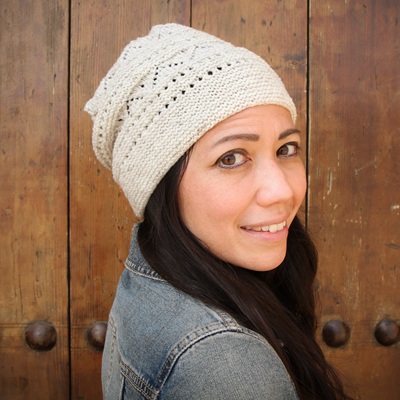
Irene Waggener
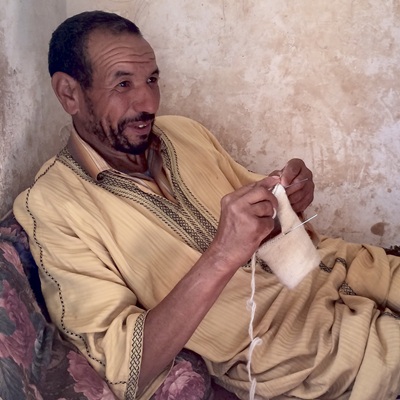
Hussein Mardi Knitting Socks in Timloukine, High Atlas.
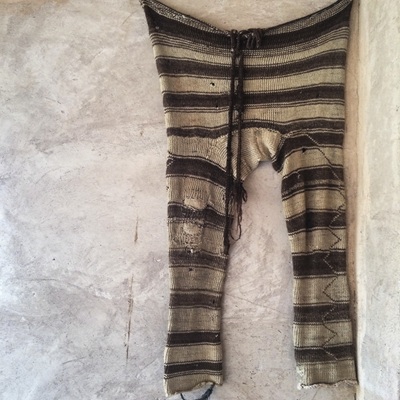
Old Leggings, to keep the shepherds warm
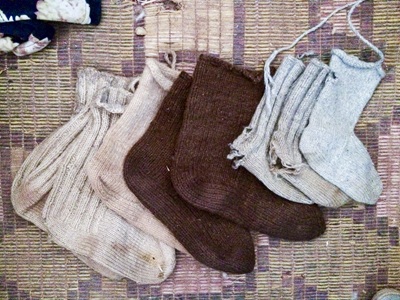
Socks worn by the Shepherds of Timloukine High Atlas
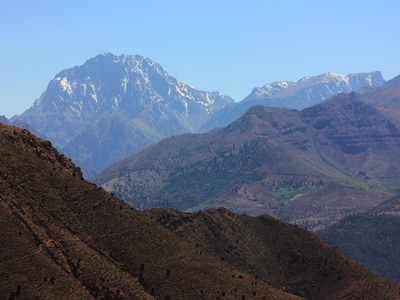
High Atlas Mountains Morocco
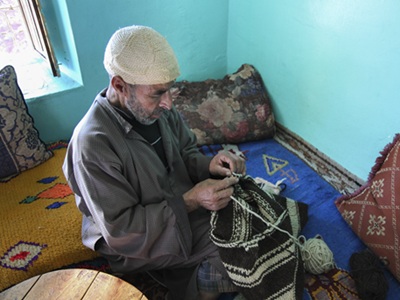
Muah Ahansali, Knitting Leggings, High Atlas
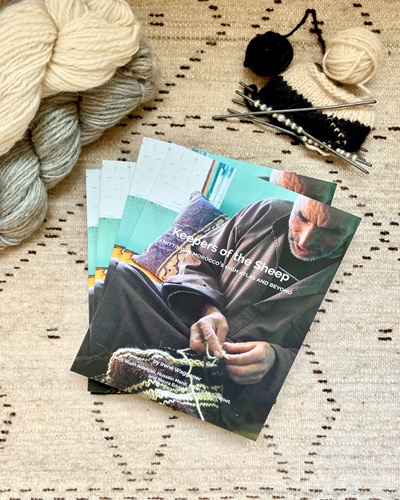
Keepers of the Sheep: Knitting in Morocco’s High Atlas and Beyond

Helen Wyld, National Museums of Scotland
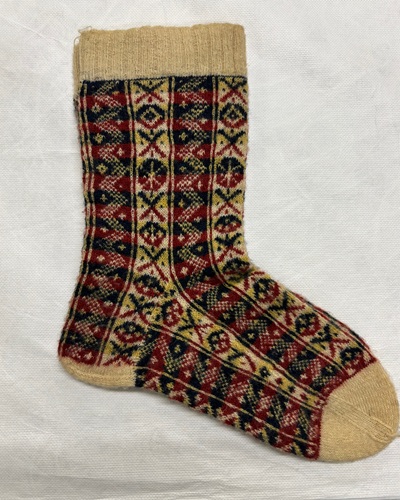
One of the Earliest Pairs of Fair Isle Socks. Donated in 1858 to National Museums of Scotland
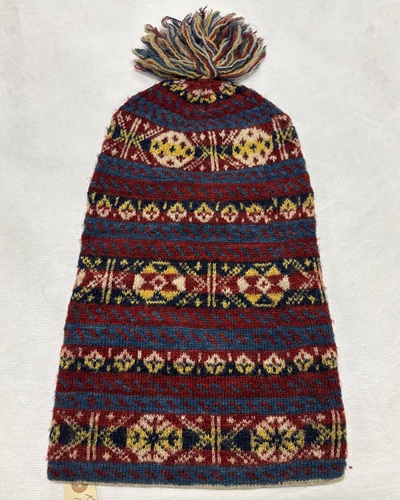
Fair Isle Fisherman’s Cap, Donated to National Museums Scotland 1880s
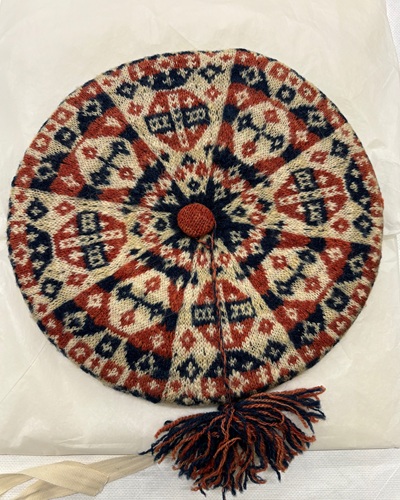
Fair Isle Bonnet, Circa 1870. National Museums of Scotland
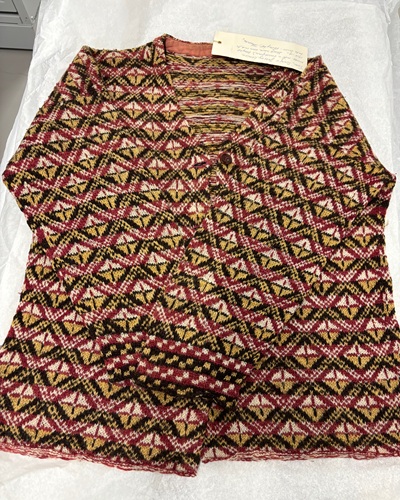
Fair Isle Knitted Cardigan, 19th century, National Museums of Scotland
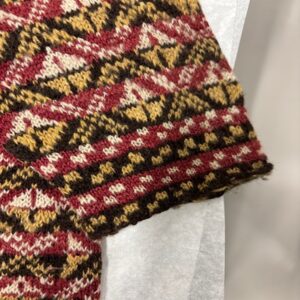
Detail of Knitted Cardigan
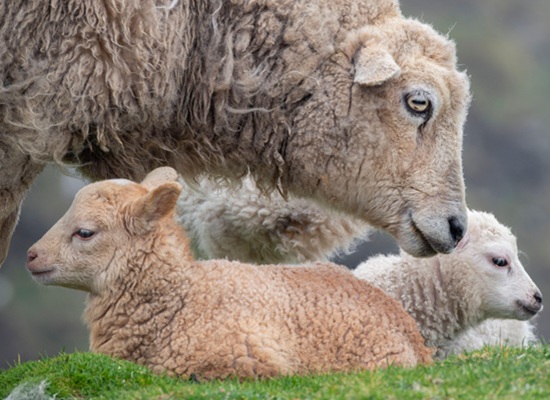
Shetland Sheep

Emily Hilliard
Script
The Mysterious Origins of Knitting
Jo: Hello and welcome to this episode, I’m Jo Andrews and I’m the host of Haptic and Hue. I’m a hand weaver interested in what textiles and their history tell us about ourselves and our communities. As some of you know, as well as running this podcast, we run a separate monthly podcast for Friends of Haptic and Hue. By we, I mean and me and Bill Taylor, who’s the editor and producer of Haptic and Hue. It’s called Travels with Textiles, and it gives us a chance to cover all kinds of subjects that come up in the news or that we come across in our travels and that we don’t get the chance to talk about in this podcast. Once a year we give you a taste of what the Monthly Friends podcast sounds like. Joining Friends cost five pounds a month or 50 pounds a year, and as well as an extra podcast, Friends get a chance to enter the draw for the textile gifts that we give away with every episode. These vary from vintage darning kits, antique French linen or upcoming gifts which are Viking Style Sewing Boxes, inspired by archaeological finds from Dublin and put together by the heritage educator Sally Pointer. Friends also get 20% off all the textile travel guides that I write with Rebecca Devaney. There are now Textile Guides to seven cities, including Paris, New York, London, Venice and Edinburgh. But the important thing about Friends is that they’re the people who keep this podcast going. We don’t carry advertisements or seek sponsorship because we think there’s just too much of that kind of noise already in our lives. And also because for us, it’s the story that counts. So without Friends of Haptic and Hue the podcast simply wouldn’t exist. We couldn’t afford to fund it out of our own pockets. So, if you are already a member, thank you. We appreciate it enormously, and please know that you make a real difference. If you’d like to think about becoming a member, the place to go is www.hapticandhue.com/join where you can find out more. What follows is April’s Friends of Haptic and Hue which is all about the mysterious origins of knitting and some of the world’s most iconic knitting patterns. I hope you enjoy it. And meanwhile, we will be back next with another new episode of Haptic and Hue’s Tales of Textiles next month, but until then, have a great time and enjoy whatever you are making.
Bill: Hello and welcome to Travels with Textiles, the special podcast for Friends of Haptic & Hue. I’m Bill Taylor, the editor and producer of Haptic & Hue.
Jo: And I’m Jo Andrews, the founder and host of Haptic and Hue.
Bill: Picture the scene. A shepherd leads his flock in the High Atlas Mountains of Morocco. As the sheep stop to safely graze, he reaches into the deep hood of his robes and takes out … well, his knitting. Yes, knitting is a man’s thing in this particular culture and it’s cold in the High Atlas, so those precious knitted socks and leggings will always be treasured. This month, Jo and I have gone in search of the origins and cultural history of knitting. As you might imagine, it’s a journey that takes us all over the place. And we’ve chosen some fairly remote stopping off points:
- Those Atlas Mountains.
- Fair Isle in the Shetland Islands.
- And the Appalachians, the mountain range that stretches north to south in the USA from New York State to Alabama.
Jo, our first travel guide is Irene Waggener. Tell us more.
Jo: Irene is an anthropologist, a textile conservator and a historian of knitting. She spent time in Morocco learning from the knitters of the Amazigh or as you may know them better the Berber people, in the High Atlas Mountains. And the result was her book The Keepers of the Sheep, which is both a cultural explanation, and also has local knitting patterns in it, so that you can recreate the designs Irene saw. But the earliest knitted fragments we have come from Egypt, and are around a thousand years old. But the story of how knitting made it to the snowy peaks of the High Atlas is much more fascinating and romantic than any history lesson I had at school. Here’s Irene explaining how she thinks the craft of working with two needles, ie knitting, spread around the world.
Irene: I think it’s difficult to pinpoint exactly where and when knitting originated. There’s definitely no simple answer to this question. It’s very hard for us to say definitively that knitting originated here at this point in time. And from the work that I’ve been doing, I’m beginning to feel that knitting likely moved in waves coming and going back and forth. So, for example knitting probably moved from the Maghreb or what is Northern Africa, Specifically Morocco, Algeria, Tunisia, that part of Northern Africa. So it probably went from the Maghreb to Iberia in the eighth century.
Jo: Spain, we just should explain.
Irene Waggener: Yes, to Spain. When, when the Umayyads had their conquest of the Iberian Peninsula, of Spain. And so, then you have in this time period from the eighth century to the 15th century, Spain is known as Al Andalus. And it’s you know, very much during this time period, a lot of Amazigh peoples were moving into the Iberian Peninsula and settling in those regions and mixing with the population. And, you know, there was a lot of cultural exchange going back and forth between the Maghreb and Iberia. And so probably in this time period is when knitting may have moved from the Maghreb into Spain. That’s one theory. So from there, to go back to my idea of things going back and forth, so we have these Amazigh settlers going up into Iberia with the Islamic caliphate conquests of that area. And then in the late 15th century, you have the expulsions of the Muslim and Jewish Andalusians from Spain, as it was retaken by the Christian houses. And so, these Jewish and Muslim Andalusians, many of them moved back to Morocco and Tunisia and Algeria, and they re-established their communities there. And one of the things that I talk about in the book, Keepers of the Sheep is those hats, they look like pillbox hats. They’re called chechia. Sometimes people call them Fezs. But the ones that are made in Tunisia are called chechia. And it’s essentially a cap that starts off knitted and is then felted to achieve that round pill box hat kind of shape. So,the Jewish and the Muslim Andalucians who were expelled from Spain, many of them ended up in Tunisia where they re-established themselves as chechia makers. Again, this is all very difficult, it’s kind of speculative but it’s believed that they probably brought it to Spain and then that technique came back again with them when those peoples were moved from Al Andalus.
Jo: So, for your book, you did a lot of work in Morocco, and one of the things that really interested me is that knitting is seen in a completely different way. In Morocco, it’s a very gendered thing. In Europe and North America, it’s seen as something largely, not completely, and that is changing, that women do. But in Morocco it was really definitely seen as something that men do, wasn’t it?
Irene Waggener: I think our perceptions of what is men’s and women’s work has changed over the years, and I think that’s holds true in Morocco as well. So, I did a lot of my work with the knitters in the High Atlas Mountains. And in that context, yes, it’s the men who do the knitting because it’s a highly portable craft that is very easy for them to carry in the hood of their djellaba robes that they wear so that when they go out with their sheep, their hands are free. And then when the sheep have found a nice place to graze, they can pull their knitting out of their hood and then sit there and continue, you know, their sock or hat or whatever it’s that they’re making. So it’s a very portable craft, and it makes sense for them to make that. Whereas for the women, the women tended to stay in the villages with the children taking care of, you know, the home life. And so, for them, they could work on these big looms that you’re not going to lug with you everywhere. And so, it sort of makes sense to have that division. So, and, and in my conversations with other people in Morocco and the cities you know, in the past everybody used to knit and they had to, because they had to produce their own clothing, they weren’t buying industrially made fast fashion items. So whatever people were wearing, it was things that they were making. And I think in order to clothe your family, probably everybody needed to contribute
Jo: So go back to the shepherds in the High Atlas Mountains. What sort of things are they traditionally knitting?
Irene Waggener: Sure. so currently most of the stuff that they’re making are, it’s just socks. However, in the past, in the recent past, they were also making knit pants that the men would wear in the wintertime. They also made hats and leg warmers. They also made sweaters. And I really wanted to find somebody who still remembers how to make sweaters, because there are definitely photographs of people wearing these sweaters. But all of the knitters I spoke with they were like, you know, our grandfathers made sweaters, but we never learned how to make them. And so the, the knitters that I worked with, they, they could speculate about how they thought they were probably made, but they had never actually made them themselves.
Jo: And were they working to patterns that were orally passed down the generations, or were they working to something that was written down?
Irene Waggener: These are definitely oral patterns. They are patterns that are passed down from one person to the next. And they’re taught by demonstration. And they work very much kind of like recipes. You know, every time I worked with people they would sort of say, well cast on 20 to 30 stitches and then you start from the bottom and you work your way up, making increases as you go, I should stop and say that I think it was possible for them to do these oral patterns that felt like recipes because the materials that they were working with were always kind of the same. So, the women in the High Atlas they do all of the spinning, and in the past, they spun a variety of yarns. And from what they told me, they had two weights of yarn that they made for knitting for the men and their families. There were, there was ifilan n’tqasher, which is the sock yarn, and then there’s ifilan n’sirwal, which is yarn for pants, and ifilan n’tqasher, the sock yarn, is a little bit thinner, whereas ifilan n’sirwal is a bit thicker. And so, the men who also made their own knitting needles <laugh> I think they always, they always knew, you know, okay, ifilan n’tqasher is about this width, so I’m always going to need knitting needles that, that are about this size. So, they didn’t necessarily have the wide array of yarn weights and you know, needle sizes that we have today. And so, it was very easy to say, okay, if you are making leg warmers for someone, you’re going to cast on about this many stitches, and then from there you could work your way through the pattern. Same thing with pants and hats and that sort of thing.
Jo: So, what were they making their knitting needles from?
Irene Waggener: They would carve them out of a specific type of hardwood from a tree that grew in their region. And they also would have a blacksmith make their knitting needles. In fact, one of my teachers, Muah Ahansali, he very kindly gave me his iron knitting needles that a blacksmith had made for him because he was like, I don’t knit anymore. I’m not going to knit anymore. The only reason why I’m doing this is because you’ve asked me about it. And so and so he gifted me his iron knitting needles, which are quite heavy. But also, recently with the introduction of bicycles they have also started clipping the spokes from the bicycle wheels. And those make really nice fine knitting needles for making socks. They really like to have a nice dense fabric that’s super tight because this keeps out the wind, it keeps out moisture. And so, they really like having those little tiny needles to work with.
Jo: And are they still passing the skills onto their sons, or is it beginning to change?
Irene Waggener: It’s definitely starting to change. When I went to Timloukine, which is the village where I did my work, people really weren’t knitting anymore. And the men that I asked they were like, you know, we’re not teaching this to the younger generations because one, they’re not interested, fashion has changed. Also, the lifestyle has changed. More and more young men are going into the big cities to work in construction or other types of jobs. So they don’t have the time to learn to knit from their elders. They’re not spending time in the pastures with the sheep the way that men used to. In the past young boys would accompany their older male relatives up to the high pastures, and it was at this time that they would learn to knit while they were watching the sheep. And they would learn by observing their uncles or their fathers or their older brothers. But the lifestyle is changing as more and more men are leaving the villages to find work. They are not working as shepherds and so they don’t have that opportunity to learn this type of skill.
Bill: Irene goes on to make the point that early evidence of knitting lies not only in Egypt, North Africa and Spain, but also in Armenia, Georgia and parts of the Caucuses, reaching into Asia. One of the earliest surviving pieces of knitting is at the world-famous Ashmolean Museum in Oxford.
Irene Waggener: Egypt, it has this great environment for preserving textiles and so that’s one of the reasons why we find so much of it. it’s also just, archeologists also being able to identify these kinds of things off, you know, sometimes going back to that really, really early piece of garter stitch knitting that’s at the Ashmolean. Like it is not sexy looking <laugh>, it’s not interesting. It is not a gold necklace or an intricately woven piece with lots of colors in it. It’s pretty boring looking. And so, people can’t necessarily be blamed for probably overlooking it and thinking, you know what, we’ll get back to this later when we have more time to look at it. But it could actually be very, very important. I do want to say though that, again a lot of the evidence for knitting in Egypt dates to the 11th to the 16th ish centuries. There’s also evidence for knitting from around the same time period in other areas as well. So, in Georgia there is a sock fragment. It’s at the Boni Museum, which is a city that’s actually very close to the border with Armenia, and this sock fragment dates to the 12th to 14th centuries. And it is very intricately done. It is it has a lot of colour work, stranded color work in it. I could only look at it through the, the glass at the museum because it’s on display. But you know, from what I was able to see, it appears to be knit from the toe up, which would make it similar to the ones that have been found in Egypt. There’s also a knit fragment from a mitten that was found in Estonia and that dates to the 13th century. So again, this is contemporary with these pieces that are being found in Egypt. And then of course you have the, the very, very fancy cushions from Las Huelgas and Spain that date to 1275. So, I think that kind of pushes out, knitting out of Egypt in some ways. To have these fragments that are contemporaneous to these ones that are being found in Egypt in Georgia and the Caucuses and then in Estonia and the Baltics and then in Spain. And it sort of really gives you this very wide area that again, if you go back and you look at trade communities, it kind of makes sense. (little laugh)
Bill: Irene Waggener’s book is Keepers of the Sheep: Knitting in Morocco’s High Atlas and Beyond. It was published in 2020. Jo, Irene’s parting thought gives us a clue on how we get to Fair Isle, the most southerly of the Shetland Isles off the north coast of Scotland, but culturally and geographically perhaps closer to Norway. The answer is that sailors from Estonia and the Baltics would run trading missions up the west coast of Norway and routinely call at Shetland, and they were happy to buy soft Shetland wool socks, hats and sweaters, and it seems that they may have brought some of their traditions with them as well. And Jo, I love the sound of those jaunty bright coloured hats with tassels that the fishermen used to love.
Jo: Most people love Fair Isle knitting and it has become very fashionable again – in fact I’m not sure it ever really goes out of style. Most people also assume it has an ancient history and has been around for hundreds of years. But there seems to be a great deal of wonderful myth-making surrounding its origins, according to Helen Wyld, who is senior curator for historic textiles at the National Museum of Scotland, and incidently, in charge of some of the most beautiful pieces of Fair Isle knitting I have every clapped eyes on! I talked to Helen in the National Museum’s store in Edinburgh:
Helen: Well we do think of it as ancient, but the origins are actually quite mysterious and early on there was a sort of effort to make it seem ancient. So, what we know is that people start describing fishermen in the Shetlands and Fair Isle wearing colourful hats in the sort of early decades of the 19th century. And then in 1851 at the Great Exhibition in London there is a description from one of the exhibitors there of knitting from Fair Isle. So that’s the first sort of definite point that we have. But we don’t really know where it came from. All we know is that in the Shetland Islands there was a very long tradition of knitting mainly stocking knitting, which can be dated to at least the late 16th century. And I think most of the women on the islands knitted in some form or another, and they would trade stockings with the fishermen and sailors who passed through every year because we think of this as a very remote part of the world, but actually Shetland was very connected by sea, and still is. And so that tradition was there. And then at some point this colourful stranded knitting arrived. And the way we can piece that together, we know that there are traditions of stranded knitting in the Baltic and in Scandinavia, which are recorded earlier than Fair Isle. And so probably it’s arrived from one or a mixture of those sources. The most similar things I’ve found to the patterns in Fair Isle knitting are in Estonia and there have been fragments of archeological stranded knitting found there. And recently some have been carbon dated to very early sort of 13th, 14th century. So, the beginning of the, the first recording of knitting in Europe. So yes, probably that’s, that’s how it’s arrived,
Jo: So, it is coming all the way up from Estonia, possibly through Scandinavia and ending up across the sea in Shetland.
Helen: Yes, and perhaps a sailor was wearing a garment, an Estonian sailor was wearing a hat or a stocking or something. And maybe more than one object arrived. But at the same time a myth, an origin myth was promoted in the Shetland Islands that this style of knitting had actually come with Spanish sailors from the Spanish Armada, on a ship that was wrecked in 1588. And the ship really was wrecked on by Fair Isle, a Spanish Armada ship. But there is no evidence that those <laugh>, those Spanish sailors brought any kind of knitting or dying or anything with them. Although interestingly, Spain is one of the first places that stranded knitting is recorded in Europe. I think there’s probably no link at all.
Jo: So, Shetland is a big place, it has a lot of islands and Fair Isle is an island that’s sort of way off down to the south. Why do we call this Fair Isle knitting rather than Shetland knitting?
Helen: Well, it does seem to have been associated with Fair Isle first. So, the early descriptions of these colourful hats are linked to Fair Isle. And in 1851 at the Great Exhibition, again, it was specifically described as Fair Isle Knitting. So, it does seem to have started there, although it was being made in Shetland fairly early on as well.
Jo: Why is it you think that knitting from this remote island has really conquered the world in a way. And everyone really knows what a Fair Isle pattern is and it has and did become very fashionable and turns up on the catwalk over and over again, whereas if I said to you, Estonian knitting it doesn’t turn up on the catwalk, what is it about Fair Isle knitting that has conquered the world?
Helen: It’s such an interesting question and I think the answer is very complex. But at the moment that it’s emerged, you are in Britain, which is very quickly industrialising and textile production in particular is being industrialised. And the 1850s, that’s the moment that Ruskin was writing about, you know, the degradation of handcraft. William Morris was at Oxford thinking about all of these things. So there’s a moment I think, of reaction against industrialisation and against mechanisation and what Fair Isle knitting represented was handcraft, but also even if it was a slightly invented history, an idea of something historic and rooted in place as well. And the way that Fair Isle was talked about in those early years in 1851, and in many of the later sort of marketing material and descriptions, it’s very much about place but also about the raw materials being very specifically the wool of the Shetland sheep and also the specific skill of the, the women of Shetland. So, it represented something that was felt to be being lost. And there is a whole movement in the later 19th century of trying to revive and protect and promote handcrafts. partly to preserve them for themselves but partly to stimulate rural industry and the economy and also to then market them to urban consumers who were a very fast-growing group. But what they represented was an escape from the ills of the modern world. And I think that’s what they still represent and that’s why it’s still such a sort of big Island thing because it still means that to us.
Jo: And we still have modern knitters, don’t we? Making Fair Isle jumpers?
Helen: Absolutely, yes. There is a very vibrant community of knitters on Fair Isle itself and also on wider Shetland who are still keeping this craft and style alive. But interestingly there are native Shetland knitters who have inherited patterns and skills over many generations, but there are also quite a lot of incomers from many different parts of the world who have moved to Fair Isle in order to engage with it. So it’s always something that appeals not just to local people, but it appealed internationally.
Jo: And so it has survived in a way. So, if William Morris or Ruskin were to go to Fair Isle today or to look at Fair Isle patterns, they would probably see something quite different, but they would probably recognise it.
Helen: I think you can definitely recognise many of the patterns, you know, in these objects from 1851 versions of them are still being, being knitted and they have been genuinely handed down from one knitter to another.
Jo: But they do develop as patterns, don’t they? Yes,
Helen: They do develop. And I think the Fair Isle style has also gone on various journeys during the 20th century which our collections don’t represent that well. But I think a breakthrough moment was when Edward, Prince of Wales wore a Fair Isle jumper that he’d been sent by a she merchant in the early 1920s. And then he was painted wearing it. And that sort of led to this kind of explosion of it being incredibly fashionable. And I think that multicolored hat is probably a result of that. But that jumper, it’s a very different color scheme to all of these is sort of beige with, it’s a beige background with colored patterns, whereas these early pieces, it’s an all over pattern. It’s not a background with a pattern like the pattern is sort of everywhere. They’re much more sort of bold, I think. And after that, you know, colour schemes really changed with the taste of each generation and the patterns also changed and became they could become a little bit sort of anodine and twee at times in the sort of middle decades of the 20th century. And now if you google Fair Isle pattern, you actually get a lot of Scandinavian patterns. It’s become mixed up in the public imagination with a lot of other types of stranded knitting. So the actual character of it sometimes gets a bit lost, I think.
Jo: You would get bright pink and lime green and all kinds of Yeah. Extraordinary colors and designs, wouldn’t you?
Helen: There’s a lot more freedom now I think.
Jo: If you were to define what this knitting is, I think you did define it, but would you define it as multi-strand knitting?
Helen: Well it’s normally described as stranded knitting, but there’s quite a sort of strict definition and it’s very clear in the early pieces that there’s only two colours per row and some stranded knitting includes more than two colors per row. And I don’t know enough about contemporary Fair Isle knitters to know whether they always adhere to that, but I think most of them do. So that that is a particular element to the, to the character of it. But even though that’s a limitation, when you look at these patterns, they just look multicolored. You don’t, you don’t think, oh, it’s limited to two colours. And that’s obviously an important technical thing when you are knitting that there are two colors per row. ’cause It could get too bulky and difficult to handle if there were more than two.
Jo: So it is a technical limitation.
Helen: Yeah, and actually that technical element is very important in determining the nature of the patterns because when you’re knitting with two strands first of all, vertical joins are not that successful always because it leads to a sort of weakness and gap in the knitting. So that’s why you have all these diagonals of x’s and circles. And also if you carry a thread on the back too far, that can lead to uneven tension and it can get caught. So often you’ll see a limit to how many stitches of a single color you have. So both those things together almost dictate this very specific X O pattern because the diagonals work and those short gaps work.I mean the other whole side of it is the sort of social side, which I don’t know as much about.
Jo: Talk to me a little about the social side.
Helen: Well, early on I mean historically the, the knitters in the Shetland Islands were knitting to, to barter and exchange their knitting for goods that they, they didn’t have locally, like tea and sugar and coffee and things like that. And that system continued into the 19th century and it became known as the truck system, and it happened also with the lace knitting where knitters would exchange what they had made with merchants, often in Lerwick who would just give them goods for store credit. But often that meant that the knitters were really paid a very, very low rate for, for the incredible amount of time and skill that had gone into their work. And there was an inquiry in the 1870s to try and sort of sort this out and put an end to the truck system, which had some effect, but it didn’t really completely end it. But also, many of the knitters, I think they were used to doing things that way, so it was very difficult system to break. So I think historically there’s an incredible amount of skill involved in making these objects, but it hasn’t always been properly rewarded.
Bill: Ever thus indeed that the people with the creative talent don’t always reap the rewards. When I was in my early Twenties – which I know is a very long time ago – I had a Fair Isle tank top which I absolutely adored and I thought at the time it was very trendy. Did that make me at the cutting edge of fashion …. I’ve never been there …. or just a young fogey following the trend of that long-ago Prince of Wales? What a horrifying thought. Over the ocean now, in the footsteps of generations of emigrants, to the Appalachian Mountains in the USA. Jo, you’ve been talking to Emily Hilliard, who is a folklore specialist working to overcome some of the many prejudices we have about the people of the Appalachians. And talking of prejudices, when I think Appalachia I think Dolly Parton.
Jo: Yes, Dolly Parton is from the Smoky Mountains of Tennessee. Emily Hilliard told me that historically Appalachia has been home to the Shawnee and Cherokee first nations. Then came Scots Irish, followed by German and English immigrants in the 18th century and later waves of African Americans from the Deep South, including enslaved Africans. Now it’s a much more diverse rural and urban society, rich in resources, but also very rich in its cultural history – of which knitting is a significant part. I asked Emily what we know about how knitting arrived in the region.
Emily: I believe that it was probably brought to the region by Ulster Scots who left Northern Ireland and settled here in the mid to late 17 hundreds. And I’ve found that in 18th century Ulster, women commonly knit wool stockings especially, and sold them to supplement their household income. And there’s evidence that they continued this in the new country. I found this reflected in public documents, I found in the public records of Northern Ireland. So, there were immigrants from Ulster to the US who wrote letters referencing knitting, and almost always socks or stockings. And it would be someone who maybe settled in Kentucky, and he’s writing back home and saying, thank you to Sally for the the socks that she sent me, usually it’s men writing to women asking for knit socks or thanking them for the knit socks that they sent. So that, that is how I trace the origins.
Jo: But one of the difficulties must have been that they were moving to this new country. They came from a country that had this long tradition or a set of islands that had this long tradition of producing wool and had different breeds of sheep, and they were moving to a country that didn’t have very much. So what were they doing for the sheep?
Emily: <Affirmative>. Well, I have found that in Kentucky, the Merino breed gets introduced in about 1809. So, we’re talking late 17 hundreds or mid to late 17 hundreds when the Ulster Scots arrive. I assume there were sheep other than Merino before 1809, and that’s just in Kentucky. But then also English breeds like Leicester, Southdown, Cotswold, Bakewell come to Southern Appalachia by 1820 at least. There’s kind of a, a middle period where I’m not sure what was happening necessarily, but we know by the early 18 hundreds, those English breeds have been brought to the US. And I’ve read scholars who say that sheep were only second in terms of importance among the livestock of settlers in Appalachia. And by 1830, sheep herding was really practiced at a large scale in the mountain south. And there are some areas of Mount of North Carolina that are bald. So it’s a rocky mountainous area, but it’s pretty devoid of grass. And some scholars speculate that that was due to over grazing of sheep. I’m not sure the veracity of that, but that has been speculated that there was such a large scale of sheep herding, especially in Western North Carolina that they overgrazed.
Jo: So you talk about this being the second most important livestock. What was the first?
Emily: Pigs, hogs <Laugh>. <laugh>, yes.
Jo: So, they were big pig people.
Emily: Yes. Yep. And you know, it produced a lot of meat. You could also have lard, which had lots of purposes.
Jo: So, you’ve got this kind of first community, your base knitting community of your Ulster Scots arriving, knitting their socks and their stockings. But then you have all this wonderful kind of melting pot of all these other influences and people coming in. Mm-Hmm <affirmative>. Can you tell me something about those who, who came in and what other traditions did they bring? Mm-Hmm
Emily: <Affirmative>. Well, I haven’t been able to necessarily tie this to what specific knitting traditions they brought. I just know that they were there, But, definitely Germans and there’s, you know, Pennsylvania Dutch, Highland Scots, Welsh, and then Irish from the Republic. Also, the Cherokee adapted or adopted sheep farming and wool production. And then I know that there was knitting practices among the Cherokee because I found an 1868 document from the Eastern Band of Cherokee General counsel that issues a declaration for a national fair at which members might exhibit their spinning and knitting along with other crafts and agricultural products. I haven’t really been able to find much yet in my research because it’s still in progress about Cherokee knitting, but I am hoping to get in touch with the Eastern Band of Cherokee or Museum of the Cherokee people and see what I might be able to, to find in collaboration with them.
Jo: So, the Cherokee, who to begin with, would never have seen sheep before because they weren’t indigenous to the Americas, would have adopted this animal, learned all these skills learnt to knit, and they really would’ve done this with enthusiasm from what you have found out.
Emily: Mm-Hmm <affirmative>. Yes. I mean, in the same time that they had a 1,037 sheep they also said that they had 429 looms and 1,572 spinning wheels. And that was in 1809. And then the scholar, I believe it was Donald Davis, said that then those numbers double by 1826, so less than 20 years later.
Jo: And are they producing these goods just for themselves, or are they selling them outside?
Emily: There may have been some selling, I think that might have been part of the the fair, the declaration for the fair might have been open to others. But I imagine it was also for home production and yeah, home use as well.
Jo: Have You seen any examples of Cherokee knitting?
Emily: You know, I was actually looking at the digital archives yesterday, and I did see some it looked like knitted leggings with some bead work, although when I looked at the metadata, it said that this was not actually Cherokee produced, it was from another tribal nation even though it was in the holdings of the Cherokee Museum. So, I have not seen any yet. But I thought it was interesting that there were there perhaps some examples of knit knitted objects from another tribal nation. And so, part of when you do research looking at Cherokee traditions, you need to submit a proposal and have it approved by the general council. And that’s part of the way that they ensure equitable representation because of the long history of colonialism and, you know, misrepresentation. So, I need to do that.
Jo: And what do you know about knitting amongst the enslaved people of Appalachia?
Emily: There is a collection of oral histories of enslaved people that was done, I believe it was the early 1900s. And then Mary Madison, who is a contemporary scholar, compiled those narratives that mention knitting, weaving, or spinning. And this does largely focus on weaving rather than knitting. And I found a, another narrative from the Library of Congress that was from 1935, and Aunt Phoebe Boyd, who was from Dunville, Virginia. And she said and this is a quote, when they hired me out, they hired me out to learn me how to knit and sew. She says something about also the socks that she used to knit and how they were tough. And I think she says something like tough as pines, it’s a very crackly recording <laugh>. But it sounds like she’s saying the socks are tough as pines. And I don’t know if that is in reference socks that she wouldn’t knit for her family, because we know that enslaved people only had access to very rough material. And then what they would, you know, make for their enslavers was usually higher quality and, and not rough material. So, I don’t know if that is about the socks that she knit for her family, or what is that in reference to. But it was interesting to find that that brief mention.
Jo: And if you were to look at Appalachia as a whole, can you say why knitting has been important in the area as a whole?
Emily: Well, it seems to me that from my research, it was a, an important part of self-provisioning for settler families in the region especially for warm socks. But there is also mention of shawls, not too many sweaters, I don’t see that mentioned very much but lots of socks, mittens, shawls, a comfort was mentioned in a Civil War letter and that is sort of like a scarf. someone at the Knitting History Forum says that a comfort is mentioned in a Christmas Carol, Charles Dickens, as a sort of scarf that was worn. But for me, it shows us how important these women’s skills were because knitting that knowledge was carried by women. And even in the Civil War letters, there’s husband’s, brothers, nephews, sons writing back to their mothers or wives, daughters asking for knitted garments. And these were not generally sold outside of the home. It was mostly this kind of internal, domestic practice, but it was important in self-provisioning. Most of these I was looking at were Union Army soldiers who were riding, but apparently what they were issued by the army, they did not like these socks. They were probably not of high quality, and so they were writing home and asking for the women in their lives to make them socks. So, it was something that was carried by women. It was something that would keep you warm and also tied to the land and, and home production.
Bill: Nothing much changes. Even in war – especially in war – a hand-knitted, home-knitted pair of socks keeps a soldier warm physically and emotionally. It was true in the American Civil War and it was certainly true in the two world wars of last century. And during the first Gulf War I remember talking to British soldiers deployed to the region who were unhappy with the quality of their equipment and asked family back home to send them better made, hand crafted socks, scarves and jumpers. The desert could be freezing at night. On one level, a pair of socks is the most ordinary item in your wardrobe. But on another level, it’s a touchstone to the capacity of home and loved ones to care for us through the touch of a woven or knitted garment crafted with love and tradition and memories of home. Is there any part of our story and history anywhere in the world that is not touched by textiles? I don’t think so. Wherever you are and whatever you’re making, I wish you happy and creative days ahead.
Jo And its goodbye from me as well.