

Episode #64
Jo Andrews
Handmade hooked rugs are the stuff of everyday life, but in Canada they became a vital form of income for impoverished seafaring families in Labrador and Newfoundland. And in northern England and southern Scotland they brightened up the hearth of many rural and urban working-class homes.
But in the far north of the British Isles a very different tradition developed where sewn pile rugs came to play a role as vital protection for sleeping bodies against night-time trolls and witches.
Join us as we explore the many forms of hooky, proggy, proddy, clooty, clippy, stobby, and bodgy rugs that have spread around the world.
Notes
You can see more of Emma’s work, both her hooky rugs and her paintings at https://www.katiepertwee.com/artists/emma-tennant/emma-tennant-works/ You can also find copies of her excellent book there: Rag Rugs of England and America, which is a great place to start.
There has been a recent exhibition of the Winifred Nicholson designed and inspired rugs that has travelled the north of England. Jovan Nicolson, Winifred’s grandson, has written a book to go with it called Winifred Nicholson Cumbrian Rag Rugs, you can find it in the Haptic & Hue US Bookshop and the Haptic & Hue UK Bookshop
Stephanie Krauss and her daughters run Green Mountain Hooked Rugs in Vermont https://greenmountainhookedrugs.com/ where they sell finished rugs as well as all the supplies to make your own. You can also find them on Instagram as https://www.instagram.com/greenmtnhookedrugs/ and Facebook https://www.facebook.com/GreenMountainHookedRugs
Carol Christiansen is the curator of the Shetland Museum and Archives https://www.shetlandmuseumandarchives.org.uk/
She has written a very good book about Taatit Rugs which you can buy from the Museum https://shop.shetlandwoolweek.com/products/taatit-rugs-the-pile-bedcovers-of-shetland
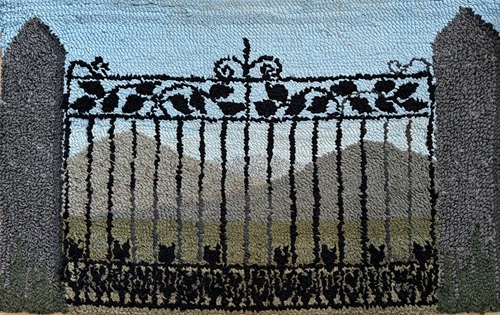
Rag Rug made by Emma Tennant
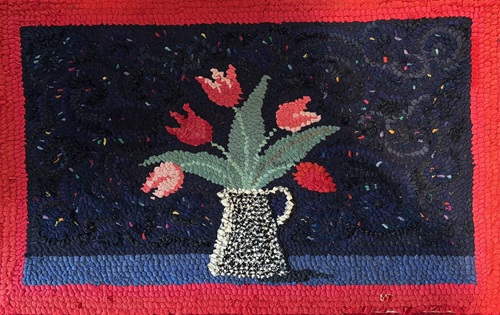
Rag Rug made by Emma Tennant
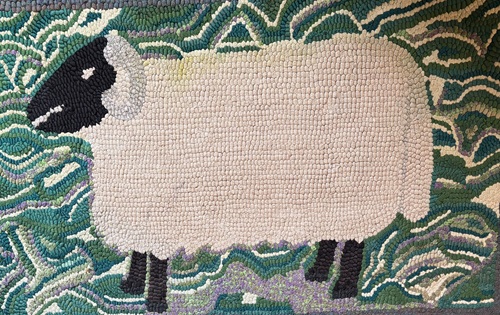
Designed by Winifred Nicolson
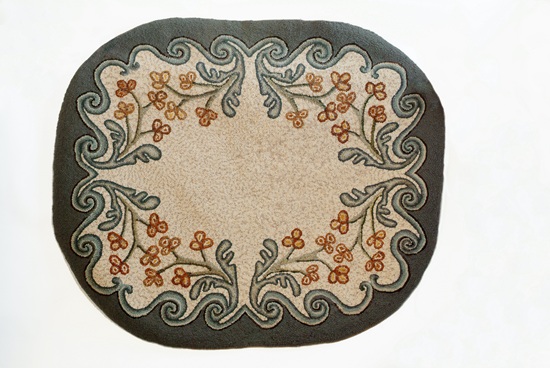
A Philena Moxley Design
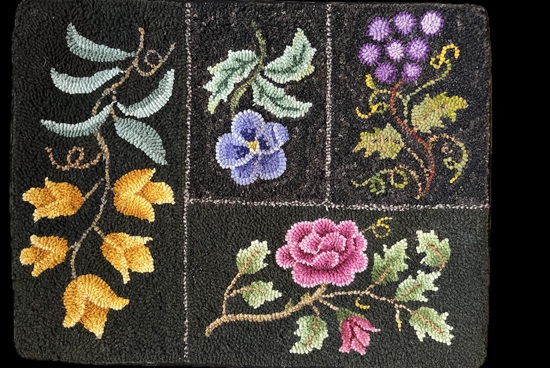
A Philena Moxley Sampler
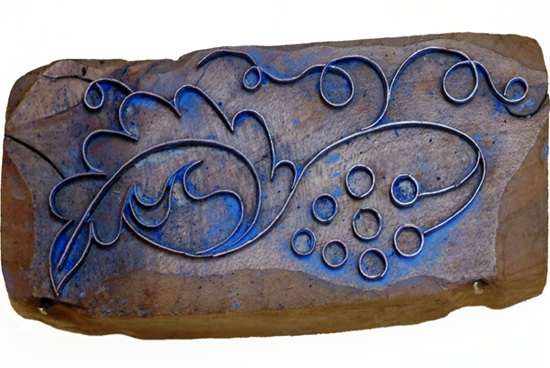
One of the Original Moxley Stamping Blocks
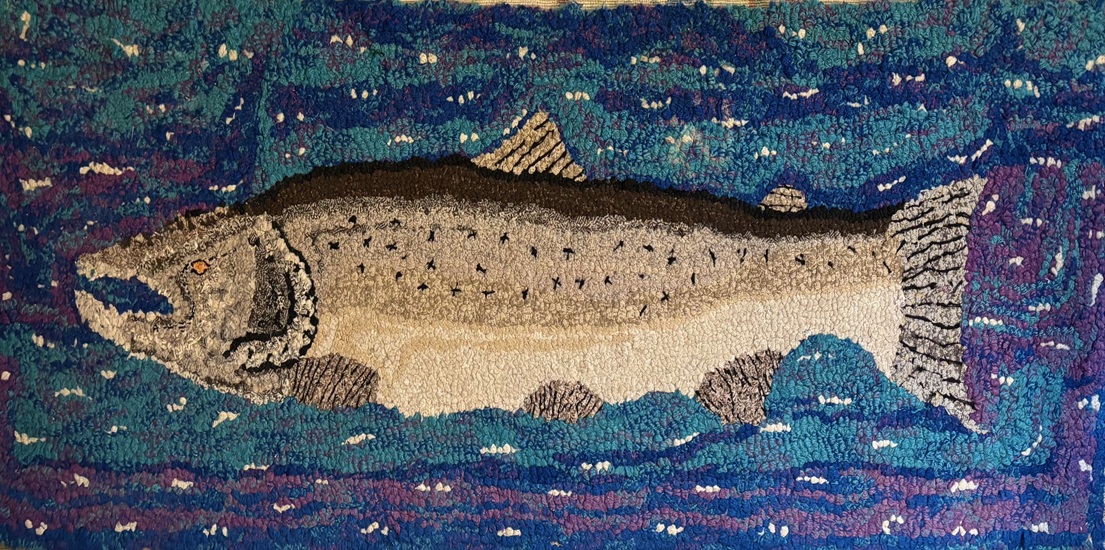
Designed by Winifred Nicolson, made from British Rail Moquette
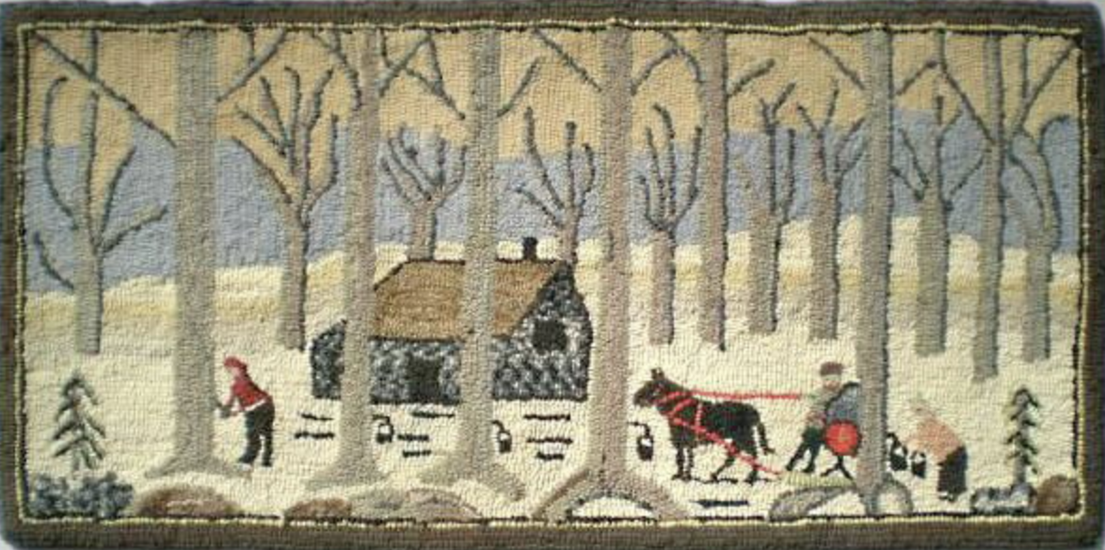
Canadian Hooked Rug, circa 1950
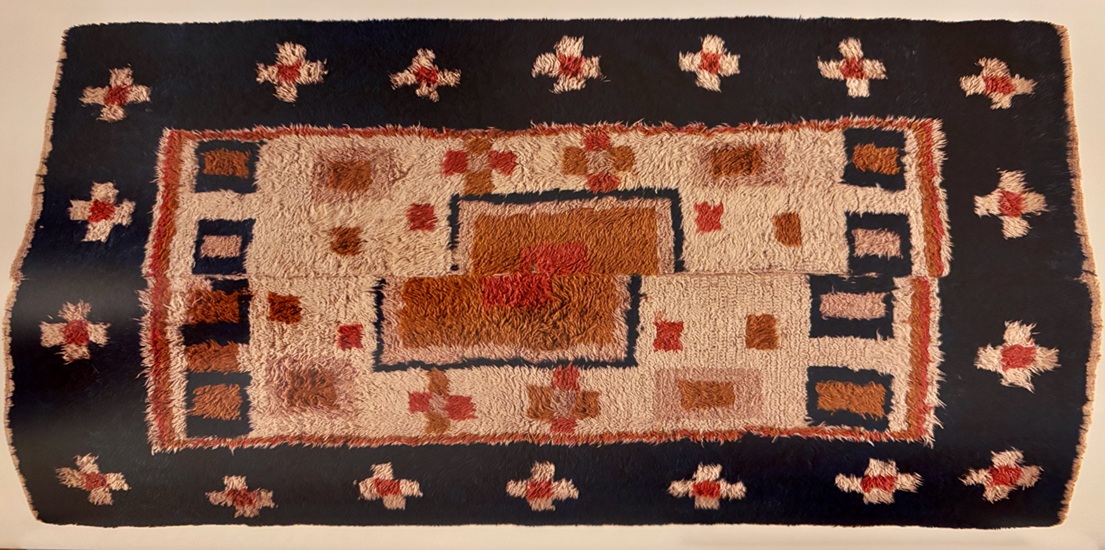
Taatit Rugs Were Made in Two Pieces and Sewn Together.
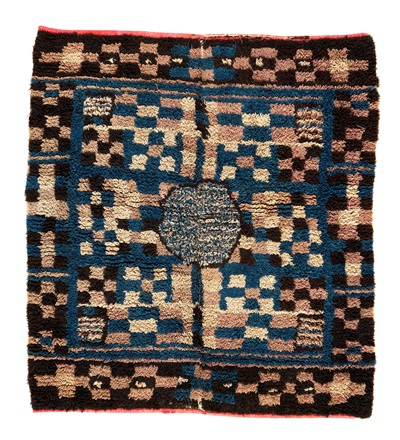
Taatit Rug Made for a Marriage in 1869 – Still Held by The Family. Photo Courtessy Shetland Museum and Archives
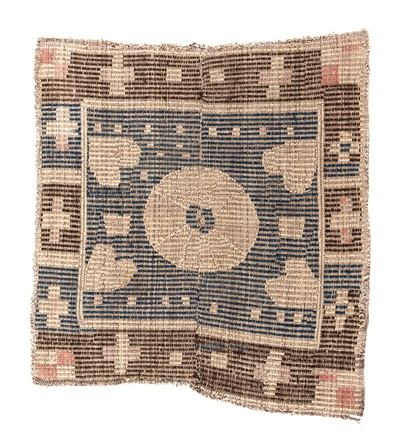
Reverse of Marriage Rug. Photo courtesy of the Shetland Museum and Archives
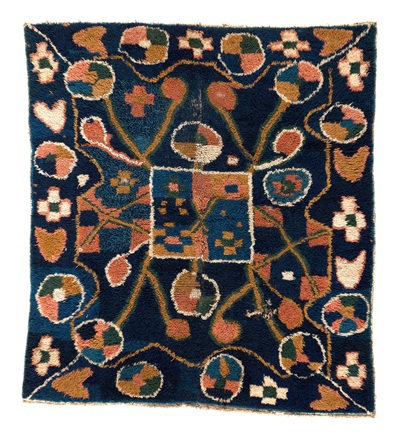
The Hearts Signify This Was A Marriage Rug, Second Half of 19th Century. Photo Courtesy of the Shetland Museum and Archives
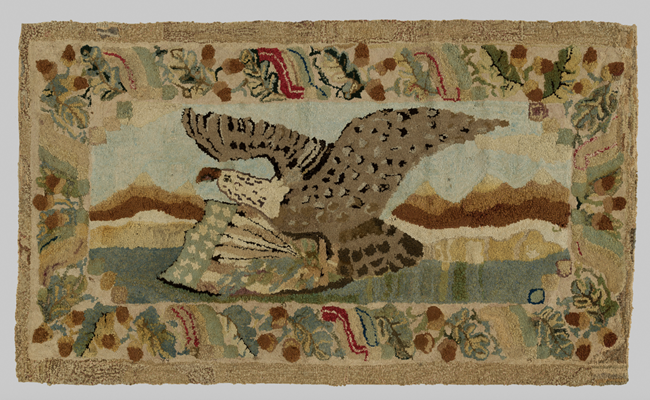
American hooked rug, Probably Designed by Edward Sands Frost Circa 1870. Metropolitan Museum of Art
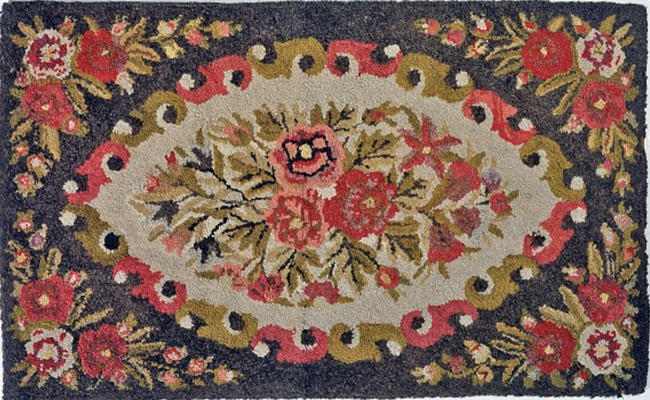
Designed by Edward Sands Frost Circa 1870, National Museum of American History
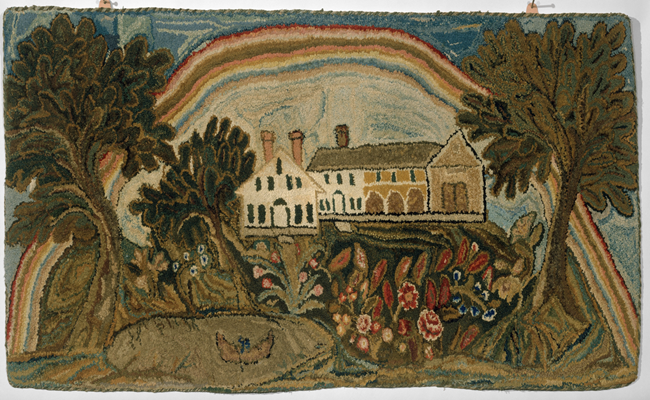
Made by Lucy Trask Bernard, Maine, Circa 1860, Metropolitan Museum of Art
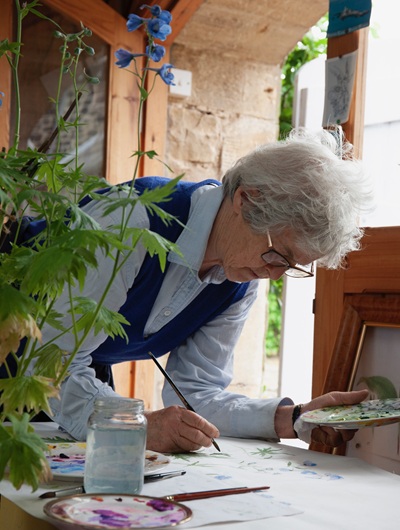
Emma Tennant
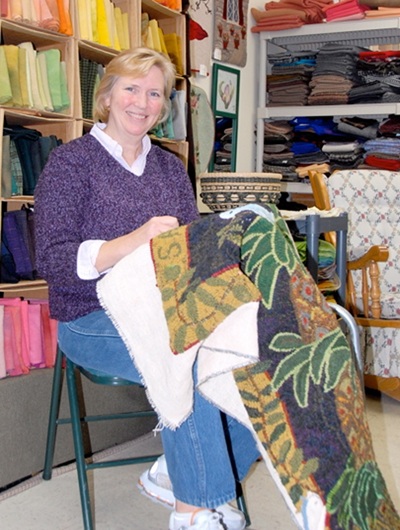
Stephanie Krauss
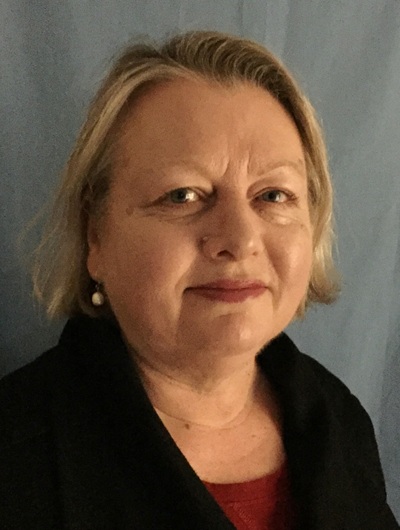
Carol Christiansen
Script
Hooky Mats and Rag Rugs: How the Art of Necessity Helped Define a Nation
Jo Andrews: Welcome to Haptic & Hue’s Tales of Textiles. I’m jo Andrews, a handweaver interested what textiles tell us about ourselves and our communities, stories that go far beyond the written word and often explore the lives of those who had little or no voice. Making hooked rugs has undoubtedly been the work of women and largely women whose names are lost to us, constructing something new out something old and worn, making ends meet, covering cold floors cheaply, replicating what they see out of their windows or perhaps memorialising the family cat in the design. This is the stuff of everyday lives. And yet over time these mats have also become something more. They have played a role in defining an American vision of itself as a nation of homespun, self-reliant pioneers, they were an economic lifeline for impoverished fishing families from Labrador and Newfoundland, and in the far north of the British Isles they were protection from witches and trolls. And they still hold meaning for makers in many areas:
Emma Tennant: It’s never died out. It was always strong in Scotland, Northeast England, particularly, Tyneside, mostly in rural or fishing communities and also in America, And that’s interesting because the Americans took it, as they do, several steps further. They’ve got much more sophisticated designs and they have examples in all their best museums. Whereas here, on the whole, old and dirty, worn rag rugs were thrown away and just made another one. But in America they are treasured heirlooms and there’s a lot of interest there. I’m pretty sure it was taken there by emigrants from this part of Britain: And it’s also quite strong in Australia and New Zealand. And most interestingly, a friend went to the Falkland Islands not long ago and brought me back photographs of rag rugs in the museum in Stanley. So, I would say it was an Anglo-Saxon tradition. But it goes back so far and it’s not really documented in wills and inventories and things because people didn’t rate them highly enough to put them there. But I haven’t done a lot of research on the Continent, but what I have has drawn a blank.
JA: Emma Tennant is an expert rag rug maker herself and has also written one of the best histories of hooked rugs. But before we go any further we need to clear up some linguistic differences. This podcast is about mats that are hooked or prodded through a burlap or hessian backing. In North America these are called hooked rugs, in the UK people tend to call them rag rugs, in this episode you will hear both terms used. And just to be clear I asked Emma to explain the two main methods used to make these rugs.
Emma: Right, there are several different name vernacular names for these rag rugs. One is the hooky where you have a longish strip of material. In my case always wool because it doesn’t get dirty like synthetic fabrics do. And also, I’m lucky I live where tweed is made and jerseys are made. You cut it into a long strip, roughly an inch or of three quarters of an inch wide, if it’s very thick like a blanket. And you, you hold the long strip under the, the back of the, of the Hessian and you pull it through with your hook and to make a series of loops. And oddly enough there’s no knot, there’s no sewing of ends. It just holds itself together with the tension of the hessian. And that makes quite a well-defined pattern. The other technique is to cut it into shorter strips, about two and a half, three inches long. People used to measure off the strip by the standard matchbox. And then you just push it from above with a blunter thing, like a blunt pencil, not a hook. And again, the tension of the frame holds it together, but you end up with a shaggy surface and that’s a proggy. So that makes a less well-defined outline, if you’re trying to do a dog or a cat a bunch of flowers. It also attracts dirt much more easily. And if you have dogs in the house, it gets very doggy hairy. So, I prefer the long hooked line of loops.
JA: In Britain the peak of rug making was in the late 19th and early 20th century Emma lives on a farm deep in the Border country between England and Scotland, where there is was strong rag rug tradition – one that lasted long beyond those years.
Emma: I asked around and sure enough every family had a frame up in the attic, not been used maybe for a while. And a hook, which was usually handmade by the local blacksmith with a shank from an old wooden handled tool and a homemade hook. And I was given one of these and also a frame. And I started making a rug. And it wasn’t a brilliant choice. It was a very big dark grey cow, I love cows. And I had an old skirt, length of tweed, which I thought would be just the thing. It only went about a third of the way down the back of this cow. That was how I learned how much material you need. You need a great deal. They’re very heavy when they’re finished because it’s a lot of wool. So, I eventually finished it and hadn’t particularly enjoyed it. But the next winter I thought, well, hang on, I would like to make another one. Maybe a sheep. We have sheep and cattle on the farm to match the cow. And from then on it started slowly, but people asked if they could commission a rug or people asked to buy one I’d made. And I gradually just got more and more into it and I found it was the perfect skill for winter evenings. I could sit here at the table, everyone was chatting, I have a bright light over my shoulder and I thoroughly enjoyed it.
JA: But this was originally a craft born of poverty and necessity.
Emma: I mean the communities I’ve mentioned, farming in southern Scotland and mining and ship building in northeast, you know, not, not rich communities, but it evolved into something more. I mean, I’ve no doubt that the satisfaction of, of making a rug and throwing it down as people did in sort of some ceremony at the end of the winter, usually putting it in a sort of key position in the sitting room and moving that one to the back kitchen and the old one to the dog kennel, it was a sort of rotation and it was quite a ceremony. And the baby of the family would be the first to roll on it. If there wasn’t a baby, the dog or cat would roll on it and, and they’d make a big do. So, I’m sure that out of this very interesting creative art, a lot of pleasure was derived far beyond just making something to put on the floor.
JA: And for a long time in the small rural communities of Northumberland and Southern Scotland rag rug making was a social activity too.
Emma: Yes, I mean the word would go around the village. One lady said to me when I asked her, yes, so and so’s putting up a frame. And most of the old ones are made on a substantial wooden frame, like the ones you use for quilts. So, the word would go around and it would be a sociable thing. You know, people would chat and like women love chatting when they do something with their hands, very much so. So, I heard a lot of those stories and you know, obviously some people were much better at it and nimble with their fingers. Other people didn’t enjoy it. They’d rather be out doors. But it was, no, it was definitely quite a big thing and everyone was familiar with it, certainly.
JA: Men played a role too. They made the frames and hooks, and often drew the designs, using a burnt stick, like giant charcoal, to draw the design onto the old hessian sacks. But there has always been this link with poverty, a rag rug marked you as being too poor to buy a proper carpet, until quite recently:
Emma: As soon as you could afford to buy a rug, you bought one. I remember going, going to Carlisle Station years ago, and I had one rolled out under my arm, something I’d made for someone in London. And one of the porters, this shows how long ago it was, there still porters at the station. He said, oh, you’ve got a rag rug under your arm. And I said, yes, would you like to see it? I was quite proud of it. I unrolled it for him. He said, “no, not likely!” He said, “I, I saw too many of those when I was growing up”. <Laugh> “I wasn’t allowed out to play until I’d cut so many strips”. So, you know, for him it was associated with, with poverty really. And he, as soon as he could go to Bulloughs in Carlisle, to buy a nice, rug, obviously did.
JA: And in Britain rag rugs tended to be expendable.
Emma: And certainly, they were just worn. And then when they got too dirty, they were downgraded, sometimes used to cover the potatoes, potato clamp in the winter or the dog kennel and then thrown away. Whereas in America, they were much more highly rated. They were treasured and there are some in the Metropolitan Museum in America, in New York and in other museums in Canada and particularly on the East Coast, which makes me think that they went there with emigrants from this country.
JA: There is no doubt that in the US, hooked rugs entered the folklore of American frontier life.
Emma: I think one of the reasons for that, which is strange to believe now is that probably right up to the end of the 19th century Britain was a much richer country than America. I mean, if you, if your daughter knew there’s books Little House on the Prairie and so on, Laura Ingalls Wilder, I mean do you remember the story where the husband went off to the nearest town, which was quite frightening, leaving the wife and children alone in a quite a frightening lonely place. And he came back and his present for the wife who was like giving her ring or something, it was a pound of white sugar. I mean, that was the ultimate, ultimate luxury. And so that sort of pioneering life meant that people were, were really poor and they couldn’t afford anything. They had to make everything for the house, the children’s clothes, you know, they made the house themselves out of these log cabins. It was extraordinarily self-sufficient way of life. And these rag rugs were part of that. And, then sort of slightly higher up the sort of social hierarchy, they copied things they’d seen in museums, they quite sophisticated French carpets and things. And that went on as a tradition in America. And as I say, a lot of those are now in the Metropolitan Museum in New York and similar institutions. Whereas here it stayed very much sort of on the kitchen floor.
JA: To understand that difference we need to turn to someone who is part of an incredible family of five generations of women, each of whom has been involved in one way or another in designing, making and repairing hooked rugs:
Stephanie Krauss: My mother was a rug hooking teacher, and actually she learned how to hook when she was pregnant with me. And so, I sort of felt like I came to it through osmosis, if you will. And then when I was about six years old, she was teaching rug hooking classes, and she would drag my younger sister and brother and me along to classes. And I’m the kid that just kind of took it up.
JA: Stephanie Krauss and her daughters now run Green Mountain Hooked Rugs in Vermont, but her rug hooking heritage begins with her great grandmother, Philena Moxley in 1865:
Stephanie: Well, I can tell you it was a very good business for my great-grandmother at age 19. She bought 500 of those stamping blocks from a gentleman from England, and she started small, just in the back of her apartment, stamping these designs for people. And she made enough money so that she bought a piece of property in Lowell, Massachusetts, and had a house built so that her shop was in the bottom of the building. And she and her mother and her sister lived in the upstairs apartment. So yes, it was, it was a very profitable business. And, and of course, she expanded it to, to include other fancy dry good things as in threads and fabrics and, you know, needles and whatever other things that ladies might like of the day. So yes, it was a good business.
JA: And here’s one of the essential differences between America and Britain. In America, rug hooking began as a home craft, but by the middle of the 19th century much more complex standardized patterns could be bought:
Stephanie: I think they, at, at first, they were hand drawing these things, you know, they took those burlap sacks and they hand drew the things that meant something to them, their flower garden or their special animal. I think perhaps they started doing some commemorative kinds of things, you know, commemorative birthday or an anniversary, or it’s a wedding rug, or something along that line. Edward Sands Frost was an itinerant pedlar in the probably 1840s, fifties, sixties, right in there. And he realized as he’s going around all these farms, he’s realizing that these women are hand drawing many of their designs. And and he decided that he could, he could create patterns, multiple patterns using a tin, a big piece of tin with cut out sections and then using, and then inking over that tin and, and have the ink set come through to the, these burlap pieces of fabric. So, you begin to see more standardized kinds of pattern making.
JA: Her great grandmother, Philena Moxley, was doing the same thing, using a series of stamping blocks of different elements like leaves and flowers and then combining them in her own designs. Stephanie still has some of the blocks:
Stephanie: And one weekend my mom was cleaning out her rug hooking supplies and all of her wood wool fabric. And my dad showed me some of these wooden stamping blocks. I was like, oh my gosh, I have to design a rug using these wooden stamping blocks, which I did. And I used some of the wool from my mom’s stash and created my own, my first rug hooking pattern using great grandma’s stamping blocks. So yes, I still have some of the blocks.
JA: You can see some of Stephanie’s rugs from her great grandmother’s designs on the webpage for this episode www.hapticandhue.com/tales-of-textiles-series-7. These were elaborate designs:
Stephanie: Oh my gosh, she was wonderful. Absolutely a wonderful designer: many of them are, are florals with sort of scroll, you know, some are scrolls that can be added as an outside border but primarily florals. And also, she, she designed some with curlicue letters and what have you. Oh, she had one that was a horse head. And because my mom was raised on a horse farm, and then she ultimately raised horses also, she used that block that, that horsehead block and created a hooked piece using that.
JA: But not all of the blocks survived:
Stephanie: So another piece of the story is that there was a coal strike in the 1890s. And so a lot of those wooden, wooden stamping blocks went into the fire. And my grandmother had a memory of, as a young girl, of raking those tin strips out of the, the fire out of the grate, the following morning after they were burned. However, of the approximately 2000 stamping blocks that my great-grandmother had about 500 of them survived. Many of the larger ones did not survive. So that’s kind of sad.
JA: Many of the remaining blocks were donated to a local museum. In time the American hooked rugs looked very different from their British counterparts. It was taken up much widely and the patterns developed more. Apart from the ubiquity of the kits and stamped patterns, the subjects for the mats were quintessentially American – log cabins, clapperboard houses, and the Stars and Stripes. Some of the American rugs borrowed from patchwork quilts and others even mimicked Persian and Turkey rugs.
What else is different is that by the 1920s and 30s with the advent of the Arts and Crafts movement, collectors in America began to see old hooked rugs as folk art and Americana:
Rug collecting outings became fashionable for New Yorkers in 1920s and 30s. Here’s William Winthrop Kent – an authority on antique rugs, describing an expedition:
“The hunting of the rug is going on daily. Literally thousands of attics and farmhouses have been searched each year in New England and Canada and the supply in many places has given out.”
Stephanie Krauss still sees the results of this kind of rug hunting by collectors in her work as a repairer of hooked rugs.
Stephanie: I was contacted about 13 or 14 years ago by somebody who was asking about rug repair. And they said, well, we have about 75 rugs in our collection, and some of them need repair. And I was like, oh, well, okay. This was in Southampton, New York, which is a very desirable place, which I didn’t know about, it was a place that New Yorkers travelled out to, in the, early 20th century and on through, even up until now, it’s become even more popular and, and the homes are very prized. Anyway, so, ultimately the people had me fly down, take a look at their collection, and the collection are rugs all from prior to 1910 because the house was built in 1928, and it was the hunting lodge cottage for this very, very wealthy family. All of these hooked rugs came from New England, Pennsylvania, all along the Atlantic Coast and some into Canada. But it was a designer, a home decorator who went around and collected all of these rugs, and sure enough, this whole house was decorated with these beautiful old hooked rugs. So anyway, it’s a job that I still have. I go down to their place two to three times a year, and I repair their hooked rugs. But it’s lovely to see all of these old hooked rugs.
JA: So successful was the revival in North America that people began making hooked rugs again to feed the appetite for Arts and Crafts goods. Mats from Labrador and Newfoundland in Canada were especially highly prized. They were made using a finer technique than American rugs, and to different designs, and that’s because of a man called Wilfred Grenfell, an English doctor who arrived in the 1890s and set up a mission: Here’s Emma:
Emma: They were very, very hard up the fishermen and Grenfell was a doctor, I believe it still exists, the Grenfell Mission. There was a lot of tuberculosis. A lot of the men were ill and, and couldn’t work and really hard up. And he, he introduced rag rug making and got them sold at sort of proper prices. That’s to say not just pocket money, but you know, useful amounts back in England. And they were very, very fine. If you cut the strips of wool very thinly, you’re almost in the world of gros point tapestry and you can do, fine shading and fine detail. And again, as I do, they got their inspiration from the surroundings, boats, fish, birds and so on. And they are really beautiful. And that was, that was a wonderful thing to do. In fact, I met one of the designers, he used to get, you know, really good designers out from England to help. And she was an old lady living in a, in a home in Chiswick. And, and she designed wonderful sort of semi-abstract things based on fishes and birds.
JA: Stephanie says Grenfell rugs still come to her for repair and they aren’t difficult to recognise:
Stephanie: And so, I can often tell when I see a Grenfell rug, because it has very fine loops, more of a northern look to it, whether it be geese flying, anything that’s sort of northern, you know, that kind of thing. But it’s the material and the style of hooking more so than anything else. And those are the things that inform me as to where it came from.
JA: Even in Britain the rug did slowly begin to leave the kitchen floor. There are rag rugs at Vanessa Bell and Duncan Grant’s house, Charleston, in Sussex and one of the Great Bardfield artists, Lucie Aldridge, began making beautiful hooked rugs during the Second World War. But the artist who really saw them was Winifred Nicolson, who lived for much of her life in Cumbria. She was a professional painter deeply invested in modern art movements, and at the time that included so called naïve art. She began to encourage local rug makers to use better design and to see the worth of what they were doing. Here’s Emma:
Emma: Yes. Well, Winifred was a, a sort of force of nature. I mean, she was a really remarkable person. She was the first wife of Ben Nicholson the artist. And when they were married, they lived in France and also Switzerland. They were friends of people like Mondrian. They were right at the heart of the art world of the twenties. And when she and Ben split up leaving her with three smallish children and single mother, she returned to Cumbia and to a house on the Roman Wall where I got to know her, because it’s not far from where I live. And she was as well as being, you know, a very good artist in her own right. She also was very interested in local crafts, which she discovered were going on around her. And she encouraged them first by selling rugs designed by local people. I bought one or two, I wish I bought more. Some of them were really good. And also, by encouraging people. She felt she was very idealistic and she thought that everybody had a sort of artistic spark if they could only find it and it was better for them to do something that they thought of themselves. But she helped people and she did sometimes design rugs. But she was a force for good.
JA: Emma has a number of the Winifred inspired rugs at her house: one in particular I loved, a big fish made using offcuts from the Carlisle company that made covers for British Rail train seats in 1970s in a particularly virulent turquoise. It looks much better on the fish. With Winifred Nicolson’s support the local museum began to collect them.
Emma: She certainly saw them as valuable, something to treasure, something to encourage. I wish she was here now she’d have a very interesting answer. But I think she’d say as I do, that there’s no barrier between art and craft. It’s not as if there’s a fence or a hard line. There’s an overlap and the best of craftsmanship. It’s obviously becomes a work of art. There’s a sort of merging. I always think it’s like a wood, a forest that hasn’t got a fence. It’s gradually you get more and more trees and you realize you’re a forest when you were in open country before. And the two, I think the division between the two, which rather goes back to the way art schools divide things up, is very sad. I mean, I really admire artists like John Nash and John Piper who have a go at everything from stained glass and tapestry to, to painting and printmaking. I think it’s a great pity to divide these things into categories.
JA: Historians say that the origins of hooked rugs are murky, which seems to be code for they don’t really know. William Winthrop Kent – the American Rug expert – thought they went back at least until Tudor times and that they originated in the British Isles. Others though think they may have arrived from Scandinavia with the Vikings.
And certainly, if we travel to the far north of the British Isles – to one of the Vikings’ great way points on their journey – the Shetland Isles, we find another kind of rug, sewing wool into a woven background.
Carol Christiansen: A taatit rug is actually a pile bed cover. It’s a piece of cloth that’s made of hand spun, hand woven Shetland wool. It’s made really in two parts. There’s a woven ground, which is made on a very small narrow floor loom. We have one taatit rug from the 1760s. It was made on a warp weighted loom, which is the kind of loom that Shetlanders did use until the very late 18th century.
JA: Carol Christiansen, is the Curator of the Shetland Museum and Archives and she says that once the ground fabric was made on a loom it was often fulled in the sea, and then the work of creating the top decoration with wool strands could begin:
Carol: So, the ground, because it’s a tabby weave, it creates a grid for you. And you would put your needle from the top down. And then you would bring it up again. And as you go around again, you were creating a loop on the one side. Then you’d go back down again, and you’d come up a little distance away and do the same thing over and over. So, I think they generally did about 15 loops before they had to kind of start again with a new length of yarn. And in this way they could make lots of geometric designs, which they did. And the whole one side of the ground fabric is then covered in these taats, then the loops are then cut, and this creates your pile.
JA: Because the ground was woven in narrow strips, to make a bedcover two strips had to be joined together. Sometimes to celebrate a marriage the bride’s family would make one half and the groom’s the other, and they would be joined together before their wedding day and serve for life as the marital bedcover. Often the two halves did not quite match – a great metaphor for marriage.
Carol: Yeah. I think it is a wonderful thing, and the fact that it’s such an important component to beginning your life together as a couple. One of the things that I became really interested in was the fact that it’s bedding because we have so little bedding that survives. Okay, there are the really, really fancy embroidered early pieces of that royalty had and all of that. But really the bedding of everyday people really doesn’t survive. And all the events that take place in a bed, which are ground breaking for a couple in a way, they are united in that bed. They consummate their marriage in that bed. They have children in that bed. They nurse the sick in that bed, and people die in that bed. And all those, those things were going on under a taatit rug through that whole family’s life.
JA: The Shetland Museum has a collection of around 65 taatit rugs and because this is a place where the old ways lasted much longer than they did elsewhere – Carol has also heard first-hand accounts from people who slept under them.
Carol: I met an old man from the island of Whalsay who subsequently donated his half of a taatit rug. The other half was lost, but he told me that he remembered sleeping under this with his brother when they were kids at their granny’s house, and this would’ve been probably in the late thirties. And he said that he really liked the taats next to his body, and he would throw off the sheets, the cotton sheets that she had on the bed, because he liked the softness and the warmth of that wool against his skin. So clearly this was the most comfortable way to use a taatit rug.
JA: By modern standards, though, there was nothing comfortable about a traditional Shetland bed.
Carol: Generally, it would’ve been like a wooden board or some sort of pallet sort of board, a shelf along the wall. Sometimes a box bed, but not always. But a box bed, again, is just planks of wood. Then you would have straw or some other kind of cushioning substance. I did find out that in Shetland, people used chaff from grain or dried seaweed. And actually, dried seaweed, people like to use that because it kept fleas at bay. And also, it’s free, and it’s a really easy material to, to access: And a after a while, it gets sort of crushed down, but then you just remove it from this sort of sack mattress sack, and you just fill it up again. And then you would probably be laying directly on, on that. And then you’d have your taatit rug.
JA: Taatit rugs have three main designs on them: circles, checkerboards or a scatter of squares and rectangles and lastly an equidistant cross which is not a Christian cross.
Carol: Those three symbols appear over and over and over again on nearly all taatit rugs. They are often used in combination. So, for example, you might have a circle that has a lot of these crosses in the middle of it, but also if you have a lot of crosses and you put them adjacent to one another, you end up with a checkerboard. So, I wanted to find out what do these symbols mean, you know, what is the point of them and why, why were they used so commonly on these rugs. And I was looking in, of course, Shetland folklore. In Shetland, it was witches and what are called trows, it’s the Shetland way of saying a troll, but it’s not the same thing as a troll in Norway. it’s the small people that live in the remote countryside. So, both trows and witches were considered to be a menace, potentially really dangerous, sometimes just really annoying, in all cases, you want to keep them away from, from yourself and your property.
JA: She researched Norwegian folklore too as Shetland was part of Norway until the 15th century and its influence remained strong. She found something important:
Carol: And the Norwegians used a multi-part symbol or a multi-part object to keep away what was called the Mara, which is a creature that would come to you at night and sit on your chest and make it hard to breathe. Now, one of the symbols that the Norwegian people used to keep the Mara away was the checkerboard, because they believed that the Mara could only count to three. And so, a checkerboard by definition has to have at least four squares. So, the belief was that the Mara would count up to three and then have to start all over again. And because they could only count up to three, and they would do that over and over and over again. And then they’d get so fed up with not being able to count all the squares, the checkerboard, that they would leave you alone. And the Mara was believed not just to affect humans, but also livestock, in particular horses. And so the Norwegians also would hang like a pine branch where horses were stabled because a pine branch is a multi-part object. It has a lot of needles. And so that was believed to have kept the Mara away from horses. So that to me, gave me some information about what these symbols might mean in taatit rugs, because the trows and the Mara, they only visit at night. They’re completely nocturnal creatures. And I think it was really telling that you’ve got a bed cover that’s got symbols that’s protecting you from creatures that visit at night.
JA: So, a taatit rug was both a warm, practical thing and a magical one imbued with powers to keep away the menaces of the night:
Carol: Yes. Because when you’re asleep, you’re very vulnerable. And the Norse had a lot of beliefs about sleep and about dreams and about dreams for telling the future, and about having difficulty in dreaming bad dreams with bad events that are about to happen. I think it’s also telling that the cross symbols, which were one of the main symbols you used to keep trows away from you, a cross symbol, is used primarily along the border of a taatit rug, in which case it’s the border of your bed. It’s the edge of where your, your bed is and your body starts.
JA: And although we may think of these as folk beliefs that we have long left behind, Carol thinks they still carry resonance for us.
Carol: Once you’re in that bed, you can consider that space to be a protective space. And we still kind of think of the bed in that way. If we’re not feeling well, we go to bed and we feel better for being in the bed. So, the bed really has a lot of meaning to it, even in modern times. And the other thing we have to think about in terms of these symbols is that some of them are still used today. So, for example, the symbol that we use to signify a place of help or a place of safety is one with a cross. And I don’t mean a church. What I mean is a hospital or an apothecary. A chemist, the Red Cross. The Red Cross, they are all about helping, providing safety, providing protection from disease and disaster. And no wonder it’s a symbol of a cross. That symbol is still being used, and we still recognize it today as a place to go. A place of protection, of, of assistance. So, we still communicate in that way with that symbol.
JA: Thank you for listening to this episode and, many thanks to all those listeners over the months and years who have suggested we look at hooked and rag rugs – you asked for it – I hope it meets your expectations.
It was a privilege to meet Emma Tennant and to see her rugs, to talk to Stephanie Krauss and hear about her unmatched heritage in hooked rug making and design. And I was delighted finally to talk to Carol Christiansen about taatit rugs.
If you would like to see pictures of some the rugs we have talked about then head over to www.hapticandhue.com/listen and look for Series Seven. Haptic and Hue is hosted by me Jo Andrews. It is edited and produced by Bill Taylor and sound edited by Charles Lomas of Darkroom Productions. It is an independent podcast free of ads and sponsorship, supported entirely by its listeners, who generously fund us through Buy Me a Coffee or by becoming a Friend of Haptic & Hue. Friends get access to free textile gifts every month and an extra podcast hosted by me and Bill Taylor, where we cover interesting events and the textile news of the day. To join Friends, go to www.hapticandhue.com/join
We will be back next month with a new textile story and we will be featuring a history of Empire in 12 carpets in the next Friends, but until then its good bye from me and enjoy whatever you are making.